Who Qualifies and How to Apply
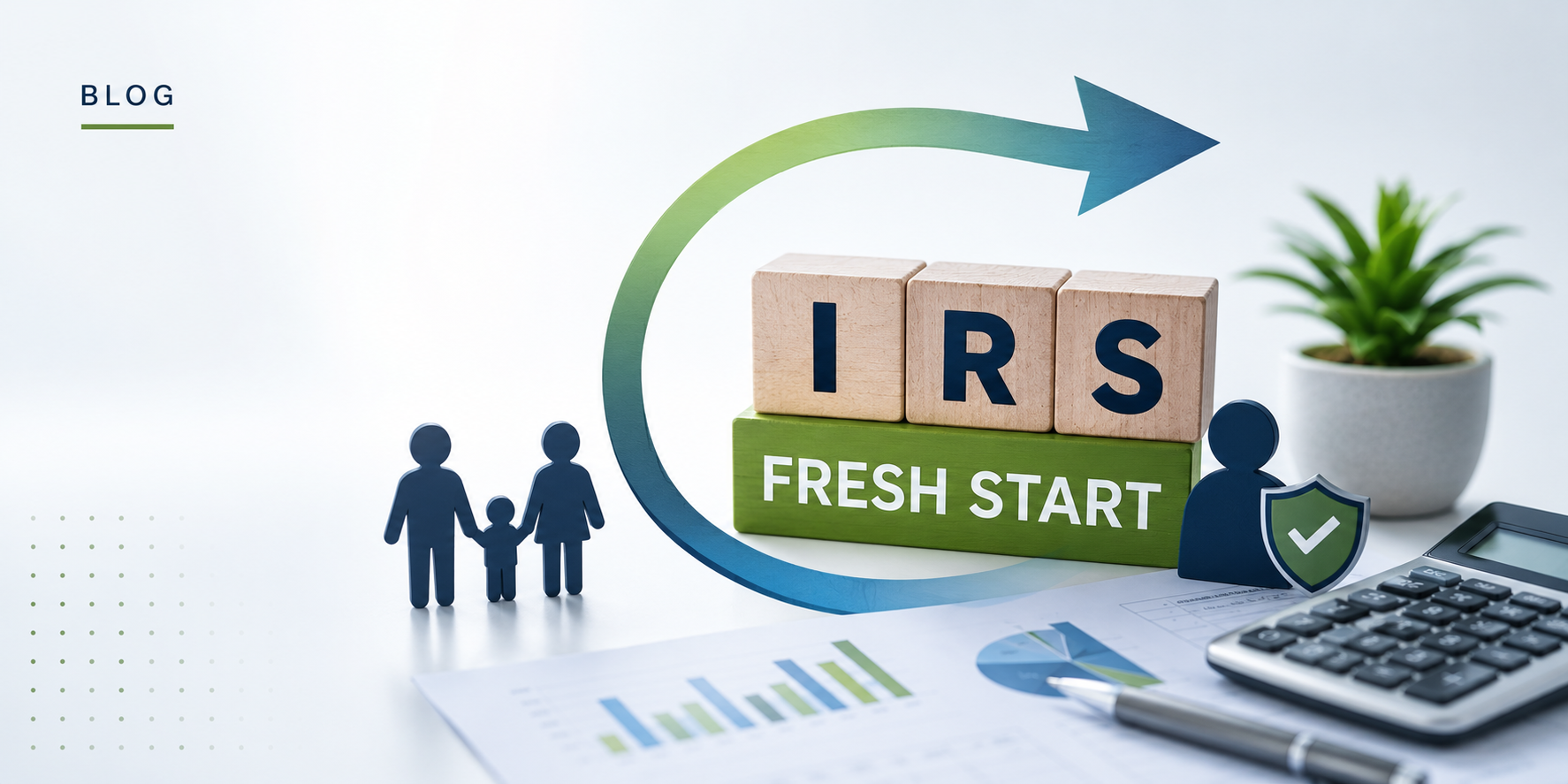
If you’re struggling with IRS tax debt, the IRS Fresh Start Program may provide options that make resolving your balance more manageable.
Despite its name, the Fresh Start Program is not a single tax law or standalone program. Instead, it refers to a collection of IRS initiatives designed to help individuals and small businesses resolve tax debts, reduce penalties, and avoid aggressive collection actions.
These relief options remain available in 2026 and continue to help taxpayers who are facing financial hardship or cannot immediately pay their tax obligations in full.
Here’s what taxpayers need to know about qualifying for Fresh Start relief and how to apply.
What Is the IRS Fresh Start Program?
The IRS Fresh Start initiatives were created to make tax debt resolution more accessible and flexible.
The program focuses on several key areas:
- Installment agreements (payment plans)
- Offers in Compromise (settlements for less than the full amount owed)
- Penalty relief opportunities
- Federal tax lien withdrawal options
- Special assistance for low-income taxpayers
The goal is to help taxpayers become compliant while reducing the financial burden of unpaid taxes.
Who Qualifies for Fresh Start Relief in 2026?
Qualification depends on the type of relief being requested.
Installment Agreements (Payment Plans)
Many taxpayers qualify for streamlined payment plans.
Generally, taxpayers who owe $50,000 or less in assessed tax, penalties, and interest may qualify for a streamlined installment agreement.
These plans typically:
- Do not require a detailed financial statement
- Allow monthly payments
- Permit repayment over as much as 72 months or until the collection statute expiration date
Taxpayers owing $10,000 or less may qualify for a guaranteed installment agreement if certain compliance requirements are met and the balance can be paid within three years.
Partial Payment Installment Agreements (PPIA)
Taxpayers experiencing significant financial hardship may qualify for a Partial Payment Installment Agreement.
Under a PPIA, monthly payments are based on the taxpayer’s ability to pay, even if the entire balance will not be paid before the collection statute expires.
These agreements require detailed financial disclosure and periodic IRS review.
Offer in Compromise (OIC)
An Offer in Compromise allows qualifying taxpayers to settle tax debts for less than the full amount owed.
The IRS may approve an OIC when:
- The taxpayer cannot reasonably pay the full balance
- There is doubt regarding the actual tax liability
- Full collection would create economic hardship or be unfair
The IRS evaluates income, expenses, assets, and future earning potential when reviewing an OIC application.
Penalty Relief
Taxpayers who enter into qualifying installment agreements may receive reduced failure-to-pay penalties.
In many situations, the monthly failure-to-pay penalty is reduced from 0.5% to 0.25% while an approved installment agreement remains in effect.
Additional penalty relief may be available through:
- First-Time Abatement (FTA)
- Reasonable Cause relief
Federal Tax Lien Relief
Some taxpayers may qualify to have a federal tax lien withdrawn.
This relief may be available when:
- A direct debit installment agreement is established
- Required payments have been made
- Withdrawal facilitates collection
- Withdrawal benefits both the taxpayer and the government
Low-Income Taxpayer Benefits
Taxpayers whose income falls at or below 250% of the federal poverty guidelines may qualify for:
- Reduced installment agreement fees
- Waived installment agreement fees
- Waived Offer in Compromise application fees
- Additional payment flexibility
How to Apply for IRS Fresh Start Relief
Applying for a Payment Plan
Taxpayers owing $50,000 or less can often apply online through the IRS Online Payment Agreement system.
Alternatively, taxpayers may submit:
- Form 9465, Installment Agreement Request
- Form 433-A or Form 433-F when financial disclosure is required
For balances above $25,000, direct debit payments are often required to avoid additional collection actions.
Applying for an Offer in Compromise
Taxpayers generally must submit:
- Form 656, Offer in Compromise
- Form 433-A(OIC) for individuals
- Form 433-B(OIC) for businesses
The IRS also provides an online OIC Pre-Qualifier Tool to help taxpayers evaluate eligibility before applying.
Requesting Penalty Relief
Penalty abatement may be requested by:
- Calling the IRS
- Submitting a written request
- Providing documentation supporting reasonable cause
Requesting Lien Withdrawal
Taxpayers seeking lien withdrawal generally use:
- Form 12277, Application for Withdrawal of Filed Form 668(Y), Notice of Federal Tax Lien
Important Requirements Before Applying
Before approving most Fresh Start relief options, the IRS generally requires taxpayers to:
- File all required tax returns
- Remain current on estimated tax payments
- Stay current with tax withholding requirements
- Provide accurate financial information when requested
Failure to remain compliant can result in denial or termination of relief programs.
Final Thoughts
The IRS Fresh Start Program continues to provide valuable relief opportunities in 2026 for taxpayers struggling with tax debt.
Whether through installment agreements, Offers in Compromise, penalty relief, or lien withdrawal options, many taxpayers can reduce financial pressure and create a realistic path toward resolving their IRS obligations.
The key is acting early, maintaining compliance, and selecting the relief option that best fits your financial situation.
Need Help Resolving IRS Tax Debt?
As a CPA firm, we help individuals and small business owners evaluate IRS Fresh Start options, negotiate payment arrangements, prepare Offers in Compromise, request penalty relief, and develop long-term tax resolution strategies.
Whether you owe a few thousand dollars or are dealing with significant IRS collections, our experienced tax professionals can help you identify the most effective path forward.
Contact our CPA team today to schedule a consultation and learn how we can help you resolve IRS tax debt and regain financial peace of mind.
Professional tax representation can make the difference between ongoing IRS problems and a successful resolution.