2026 Tax Brackets Explained: What Tax Bracket Am I In?
One of the most common questions taxpayers ask each year is, “What tax bracket am I in?” While the answer may seem simple, many people mistakenly look only at their salary or total income.
In reality, your 2026 federal tax bracket depends on two factors:
- Your filing status
- Your taxable income
Because deductions reduce taxable income, your actual tax bracket may be lower than you expect.
Taxable Income vs. Gross Income
Your tax bracket is based on taxable income—not gross income.
Taxable income is generally calculated by taking your gross income or adjusted gross income (AGI) and subtracting eligible deductions, including the standard deduction if you do not itemize.
This distinction is important because two taxpayers with identical salaries can end up in different tax brackets depending on their deductions, retirement contributions, and filing status.
2026 Standard Deduction Amounts
For taxpayers claiming the standard deduction in 2026, the amounts are:
- Single: $16,100
- Married Filing Separately: $16,100
- Head of Household: $24,150
- Married Filing Jointly: $32,200
- Qualifying Surviving Spouse: $32,200
These deductions reduce taxable income before tax rates are applied.
2026 Federal Tax Brackets for Single Filers
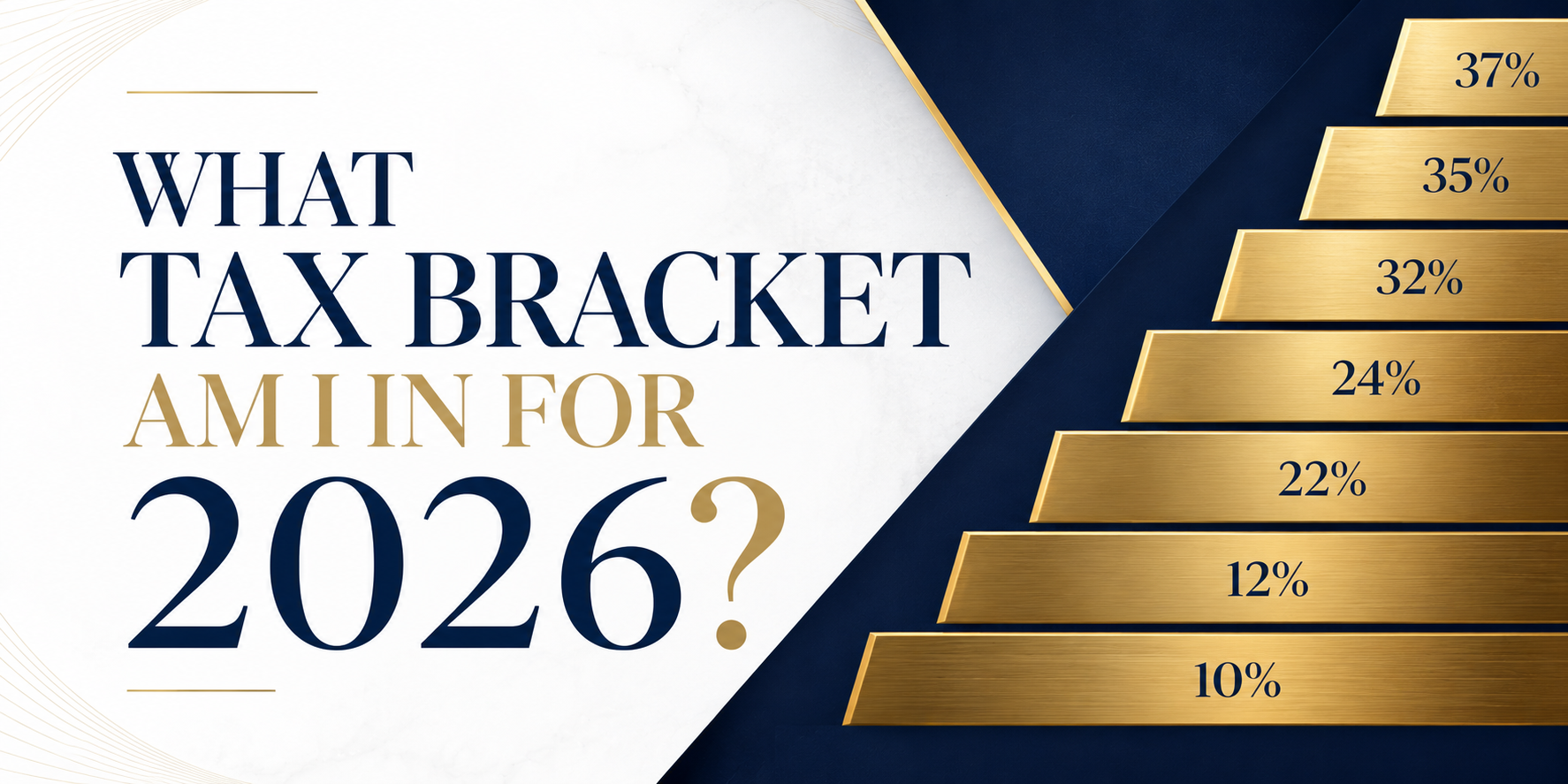
- 10%: Up to $12,400
- 12%: $12,401 to $50,400
- 22%: $50,401 to $105,700
- 24%: $105,701 to $201,775
- 32%: $201,776 to $256,225
- 35%: $256,226 to $640,600
- 37%: Over $640,600
2026 Federal Tax Brackets for Married Filing Jointly
- 10%: Up to $24,800
- 12%: $24,801 to $100,800
- 22%: $100,801 to $211,400
- 24%: $211,401 to $403,550
- 32%: $403,551 to $512,450
- 35%: $512,451 to $768,700
- 37%: Over $768,700
2026 Federal Tax Brackets for Head of Household
- 10%: Up to $17,700
- 12%: $17,701 to $67,450
- 22%: $67,451 to $105,700
- 24%: $105,701 to $201,775
- 32%: $201,776 to $256,200
- 35%: $256,201 to $640,600
- 37%: Over $640,600
2026 Federal Tax Brackets for Married Filing Separately
- 10%: Up to $12,400
- 12%: $12,401 to $50,400
- 22%: $50,401 to $105,700
- 24%: $105,701 to $201,775
- 32%: $201,776 to $256,225
- 35%: $256,226 to $384,350
- 37%: Over $384,350
Understanding Marginal Tax Rates
When people talk about their tax bracket, they are usually referring to their highest marginal tax rate.
However, that does not mean all of their income is taxed at that rate.
The United States uses a progressive tax system, which means income is taxed in layers. Lower portions of taxable income are taxed at lower rates, while only the income above each threshold is taxed at higher rates.
For example, a taxpayer in the 24% bracket still pays 10%, 12%, and 22% on portions of their income before reaching the 24% bracket.
Example: How Tax Brackets Work
Suppose a single taxpayer earns $145,000 during 2026 and claims the standard deduction of $16,100.
The taxpayer’s taxable income would be approximately $128,900 before considering any other adjustments.
This places them in the 24% tax bracket.
However, only the portion of taxable income above $105,700 is taxed at 24%. The remaining income is taxed at the lower rates that apply to earlier brackets.
This is why your effective tax rate is often much lower than your highest tax bracket.
Other Factors That Can Affect Your Tax Bracket
Several deductions and tax strategies can reduce taxable income, including:
- 401(k) contributions
- Traditional IRA contributions
- Health Savings Account (HSA) contributions
- Self-employed health insurance deductions
- Qualified Business Income (QBI) deductions
- Business expenses for self-employed taxpayers
- Student loan interest deductions
- Other above-the-line deductions
These tax benefits can sometimes move taxpayers into a lower bracket or reduce the amount of income taxed at higher rates.
How to Determine Your 2026 Tax Bracket
To accurately identify your tax bracket, you should know:
- Your filing status
- Your estimated annual income
- Whether you will itemize deductions or claim the standard deduction
- Your retirement contributions
- Any self-employment income or business deductions
- Any special tax deductions that reduce taxable income
Once those numbers are known, it becomes much easier to estimate both your marginal tax bracket and your effective tax rate.
Final Thoughts
Your 2026 tax bracket is based on taxable income and filing status—not simply your salary or gross income. Understanding how deductions affect taxable income and how progressive tax rates work can help you make smarter financial decisions and potentially lower your tax bill.
Knowing your tax bracket is one of the first steps toward effective tax planning.
Need Help With Tax Planning?
As a CPA firm, we help individuals, families, retirees, freelancers, and business owners understand their tax brackets, maximize deductions, reduce taxable income, and develop proactive tax-saving strategies throughout the year.
Whether you need help estimating taxes, planning retirement contributions, managing business income, or preparing your return, our CPA team can help you make informed financial decisions.
Contact our CPA firm today to schedule a consultation and create a personalized tax strategy for 2026.
Smart tax planning today can help you keep more of what you earn tomorrow.