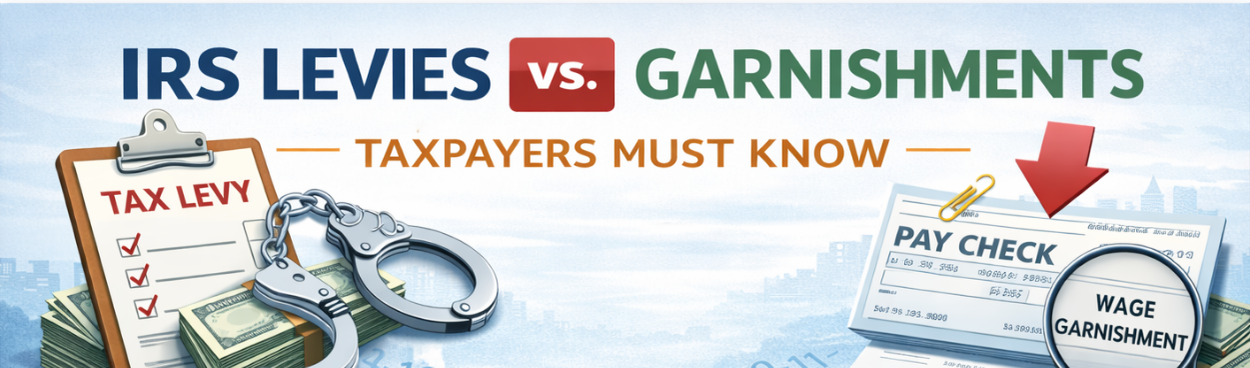
An IRS levy is a legal seizure of your property or rights to property to satisfy a tax debt. Unlike a lien, which is simply a claim against your property, a levy actually takes your property. The IRS can levy a wide range of assets, including:
- Bank accounts
- Real estate
- Cars and other personal property
- Social Security benefits
- Retirement accounts
- Wages and salary (this is where garnishment comes in)
Before the IRS can levy your property, it must generally follow these steps:
- Assess the tax and send you a Notice and Demand for Payment.
- You neglect or refuse to pay the tax.
- The IRS sends a Final Notice of Intent to Levy and Notice of Your Right to a Hearing at least 30 days before the levy is made (unless collection is in jeopardy or certain exceptions apply).
What Is a Wage Garnishment?
A wage garnishment is a specific type of IRS levy. When the IRS levies your wages, it instructs your employer to withhold a portion of your paycheck and send it directly to the IRS. This is sometimes called a “continuous levy” because it remains in effect until the debt is paid, the collection period expires, or the IRS releases the levy.
- The IRS does not need to issue a new levy each pay period; the original wage levy continues until resolved.
- The amount you get to keep is based on the standard deduction and your number of dependents; the rest goes to the IRS.
How Do IRS Levies Work?
- Bank Account Levy: The IRS can seize funds in your bank account. The bank must hold the funds for 21 days before sending them to the IRS, giving you time to resolve the issue or prove the funds are exempt.
- Property Levy: The IRS can seize and sell your real or personal property, applying the proceeds to your tax debt after covering the costs of seizure and sale.
- Federal Payments: The IRS can levy up to 15% of certain federal payments, such as Social Security benefits, through the Federal Payment Levy Program.
How Do IRS Wage Garnishments Work?
- The IRS notifies your employer to withhold a portion of your wages.
- The garnishment continues until the debt is paid, the collection period expires, or the IRS releases the levy.
- The amount exempt from levy is determined by law and depends on your filing status, number of dependents, and the standard deduction.
What Property Is Exempt from Levy or Garnishment?
Certain property and income are exempt from IRS levy, including:
- A portion of wages, salary, and other income (based on standard deduction and dependents)
- Unemployment benefits
- Certain annuity and pension payments
- Worker’s compensation
- Public assistance payments
- Minimum weekly exempt income
- Child support payments required by court order
- Certain personal property up to specified values (e.g., clothing, school books, some household goods).
What Are Your Rights?
- Notice: The IRS must provide written notice of intent to levy at least 30 days in advance (except in jeopardy situations).
- Appeal: You have the right to request a Collection Due Process (CDP) hearing before the levy occurs.
- Release: The IRS must release a levy if you pay the debt, the collection period expires, the levy creates economic hardship, or the property is exempt.
How to Respond to a Levy or Garnishment
- Act Quickly: Contact the IRS immediately if you receive a notice of intent to levy or if your wages are garnished.
- Payment Options: You may be able to set up an installment agreement, submit an offer in compromise, or request a temporary delay in collection due to hardship.
- Appeal: If you disagree with the levy, request a CDP hearing within 30 days of the notice.
- Seek Help: Consider consulting a tax professional or contacting the Taxpayer Advocate Service if you need assistance.