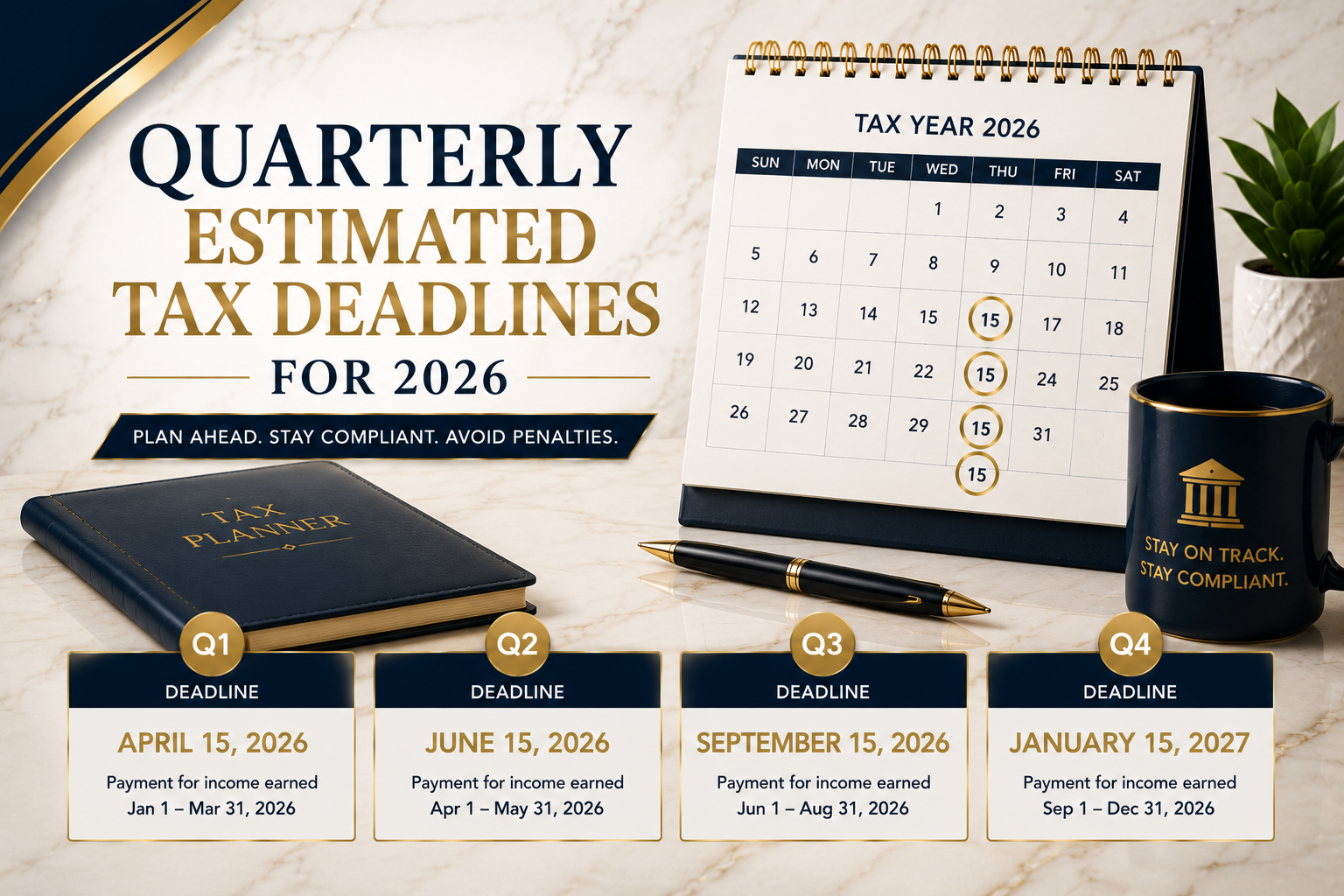
Quarterly Estimated Tax Deadlines for 2026
If you’re self-employed, earn freelance income, own a small business, or receive income without tax withholding, you may be required to make quarterly estimated tax payments to the IRS.
Missing these deadlines can result in underpayment penalties and interest—even if you pay your full tax bill when filing your return.
Here’s what you need to know about the 2026 estimated tax payment schedule.
2026 Estimated Tax Payment Deadlines
For most calendar-year taxpayers, estimated tax payments are due on the following dates:
- 1st Quarter: April 15, 2026
- 2nd Quarter: June 15, 2026
- 3rd Quarter: September 15, 2026
- 4th Quarter: January 15, 2027
These payments generally cover income that is not subject to automatic federal tax withholding throughout the year.
Who Should Make Estimated Tax Payments?
You may need to make quarterly estimated tax payments if you receive income from:
- Self-employment or freelance work
- Business profits
- Rental properties
- Investments
- Gig economy work
- Partnerships or S corporations
- Other income without sufficient tax withholding
Generally, if you expect to owe at least $1,000 in federal tax after subtracting withholding and refundable credits, estimated tax payments may be required.
What Happens If You Miss a Deadline?
The IRS may assess an underpayment penalty if required estimated tax payments are not made on time.
Even if you pay your entire tax bill when filing your return, penalties and interest may still apply if your quarterly payments were late or insufficient.
Making timely estimated payments can help you avoid these unnecessary costs.
Important Exceptions
File by February 1, 2027
If you file your 2026 federal income tax return by February 1, 2027 and pay the full balance due, you generally do not have to make the January 15, 2027 estimated tax payment.
Farmers and Fishermen
Qualifying farmers and fishermen are subject to special estimated tax rules, including different payment schedules and filing deadlines.
Fiscal-Year Taxpayers
Businesses and individuals using a fiscal year instead of the calendar year generally follow estimated tax deadlines based on their fiscal year-end rather than the standard calendar-year schedule.
Tips to Stay on Track
- Estimate your annual income early.
- Set reminders for each quarterly payment deadline.
- Review your income throughout the year and adjust payments if necessary.
- Consider increasing withholding if you also receive wages or retirement income.
- Work with a tax professional if your income fluctuates significantly.
Planning ahead can help reduce surprises and avoid IRS penalties.
Key Takeaways
✔ Quarterly estimated tax payments are generally due on April 15, June 15, September 15, 2026, and January 15, 2027.
✔ Estimated payments commonly apply to self-employed individuals, freelancers, investors, landlords, and business owners.
✔ Missing a payment deadline may result in IRS penalties and interest.
✔ Filing your return by February 1, 2027 and paying in full may eliminate the need for the final January payment.
✔ Regularly reviewing your income and updating your estimates can help keep your payments accurate.
Final Thoughts
For 2026, the quarterly estimated tax deadlines are April 15, June 15, September 15, 2026, and January 15, 2027. Staying current with these payments is one of the best ways to avoid underpayment penalties and better manage your tax obligations throughout the year.
If your income changes during the year, revisit your estimated tax calculations to help ensure you’re paying the correct amount.
Need Help Calculating Your Estimated Taxes?
Our CPA team helps self-employed professionals, freelancers, investors, landlords, and business owners accurately calculate quarterly estimated tax payments, apply IRS safe harbor rules, and implement proactive tax strategies that minimize penalties and improve cash flow.
Contact our CPA team today to stay ahead of your 2026 estimated tax obligations and keep your tax planning on track.
Smart tax planning throughout the year can help you avoid surprises and keep more of what you earn.