
Short-Term vs. Long-Term Capital Gains: What’s the Difference in 2026?
When you sell an investment, real estate, or other capital asset, one of the most important factors affecting your tax bill isn’t just how much profit you made—it’s how long you owned the asset.
For federal tax purposes, capital gains are generally classified as either short-term or long-term, and the difference can significantly impact the amount of tax you owe.
Here’s what taxpayers should know for the 2026 tax year.
What Is a Capital Gain?
A capital gain occurs when you sell a capital asset for more than its adjusted basis.
Common capital assets include:
- Stocks
- Bonds
- Mutual funds
- Investment real estate
- Personal investments
- Certain business investments
Not every asset qualifies as a capital asset. Inventory, business property used in a trade or business, certain receivables, and other property specifically excluded under the Internal Revenue Code follow different tax rules.
What Is a Short-Term Capital Gain?
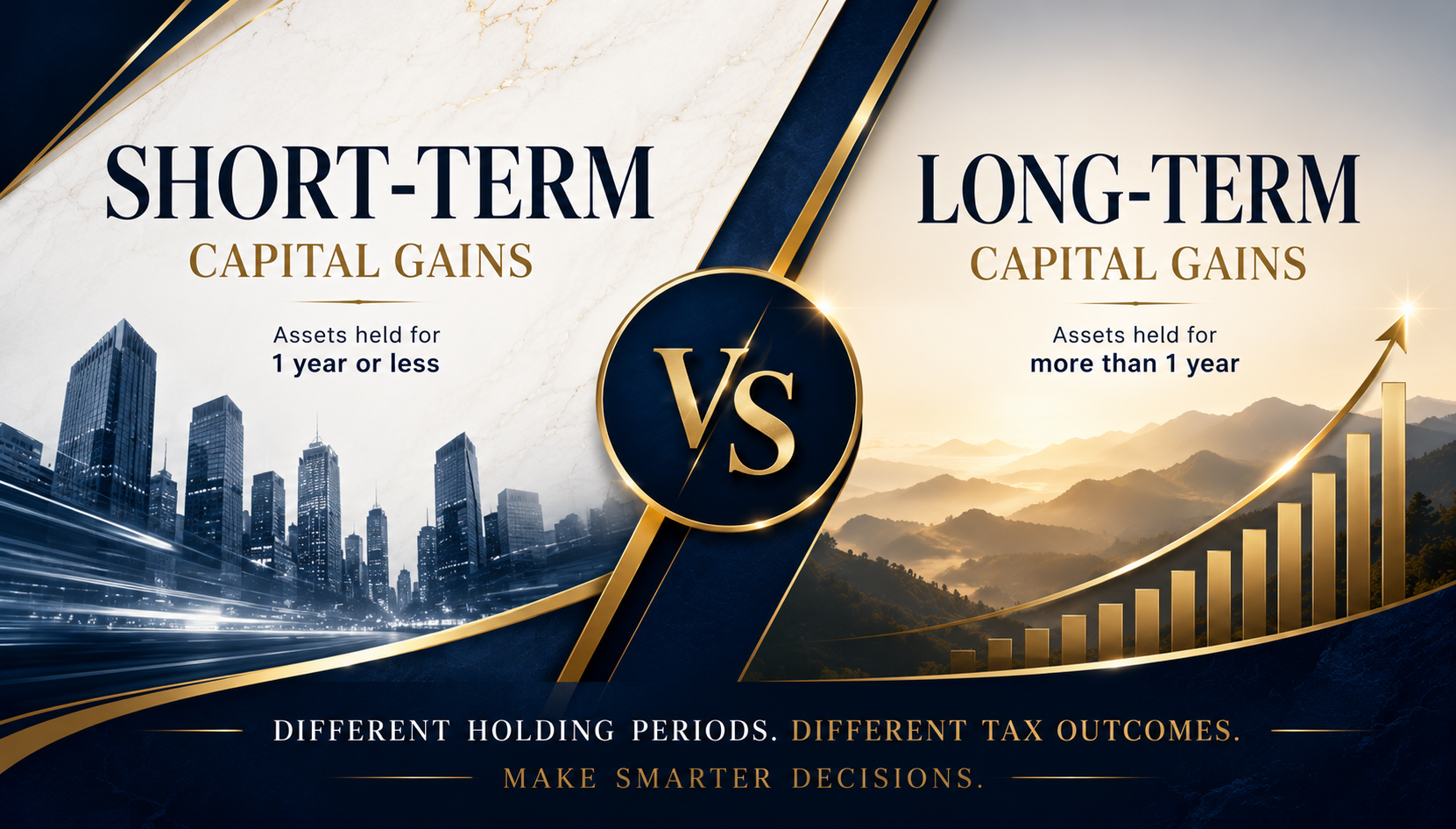
A short-term capital gain generally results from selling a capital asset that you owned for one year or less.
Examples include:
- Selling stock after six months
- Selling cryptocurrency after nine months
- Selling an investment property held for one year or less (assuming capital asset treatment applies)
Short-term capital gains are generally taxed at your ordinary federal income tax rates, the same rates that apply to wages and other ordinary income.
What Is a Long-Term Capital Gain?
A long-term capital gain generally results from selling a capital asset that you owned for more than one year.
Because Congress encourages long-term investing, these gains typically receive preferential tax treatment.
For 2026, long-term capital gains generally qualify for one of three federal tax rates:
- 0%
- 15%
- 20%
The applicable rate depends on your taxable income and filing status.
Why the Holding Period Matters
The holding period determines whether your gain is short-term or long-term.
Generally:
- Held one year or less: Short-term capital gain
- Held more than one year: Long-term capital gain
In most situations, you begin counting your holding period on the day after you acquire the asset and continue through the day you sell it.
Certain transactions may qualify for special “holding period tacking” rules, allowing you to include a previous owner’s holding period under specific circumstances.
Special Capital Gain Tax Rates
While most long-term capital gains are taxed at 0%, 15%, or 20%, some gains are subject to special maximum tax rates.
Examples include:
- Unrecaptured Section 1250 gain – Maximum 25%
- Collectibles – Maximum 28%
- Certain qualified small business stock gains – May also be subject to special rules
These special rates commonly apply to certain real estate transactions and specialized investments.
Capital Gains and Capital Losses
Before calculating tax, capital gains and losses are generally netted together.
The IRS separately calculates:
- Net short-term gains and losses
- Net long-term gains and losses
These amounts are then combined according to the capital gain netting rules to determine your final taxable capital gain or deductible capital loss.
How Capital Gains Are Reported
Capital asset sales are generally reported using:
- Form 8949
- Schedule D (Form 1040)
Short-term and long-term transactions must generally be reported separately.
Keeping accurate purchase dates, cost basis records, and sale documentation is essential for proper reporting.
Planning Opportunities
Understanding the difference between short-term and long-term gains can help reduce your tax liability.
Some common tax planning strategies include:
- Holding investments longer than one year when appropriate
- Offsetting gains with capital losses
- Timing sales based on projected taxable income
- Maintaining accurate basis records
Every investment decision should consider both tax consequences and overall financial goals.
Final Thoughts
The distinction between short-term and long-term capital gains is simple but extremely important. Assets held for one year or less are generally taxed at ordinary income tax rates, while assets held for more than one year typically qualify for lower long-term capital gains rates.
Before selling investments, it is worth evaluating your holding period, estimated taxable income, and overall tax situation to avoid paying more tax than necessary.
Need Help Planning Around Capital Gains Taxes?
As a CPA firm, we help individuals, investors, and business owners develop tax-efficient strategies for selling investments, real estate, and other capital assets. From calculating adjusted basis to maximizing available tax benefits, our team can help you make informed decisions before you sell.
Contact our CPA team today to schedule a consultation and create a tax strategy that helps minimize capital gains taxes in 2026 and beyond.
Proactive tax planning can help you preserve more of your investment returns.