
Ten tax moves Tampa Bay business owners can make before December 31, 2026: equipment write-offs, retirement plans, S corp payroll, the new $2,000 1099 rule and more.
Ten tax moves Tampa Bay business owners can make before December 31, 2026: equipment write-offs, retirement plans, S corp payroll, the new $2,000 1099 rule and more.

Wash Sale Rule Explained: How to Avoid or Properly Account for a Disallowed Investment Loss Selling an investment at a loss can create a valuable tax benefit—but buying back the same or a substantially identical investment too quickly can trigger the wash-sale rule. The important point is that a wash sale usually does not permanently...

Home Sale Tax Exclusion in 2026: What Homeowners Need to Know Selling your home can create a significant federal tax consequence—but many homeowners may qualify to exclude a substantial portion of the gain. Under IRC Section 121, eligible taxpayers may exclude up to $250,000 of gain from the sale of a principal residence, or up...

How to Avoid Estimated Tax Penalties in 2026 If you earn income that isn’t subject to tax withholding—such as self-employment income, rental income, investment income, or other non-wage earnings—you may need to make quarterly estimated tax payments. Paying too little or missing payment deadlines can result in IRS underpayment penalties. Fortunately, the IRS...

Tax Tips for Gig Workers in 2026 Whether you drive for a rideshare company, deliver food, freelance online, sell through digital platforms, or earn income as an independent contractor, your gig income is generally taxable. Even if you only work part-time or never receive a tax form, you’re still responsible for reporting your earnings...

Crypto Taxes in 2026: What You Need to Know Cryptocurrency and other digital assets remain taxable under federal tax law in 2026. Whether you’re buying, selling, mining, staking, or accepting crypto as payment, it’s important to understand when taxes apply and how these transactions should be reported. The IRS continues to treat digital assets...

Should You Itemize in 2026? Here’s How to Decide One of the most common questions taxpayers ask each year is whether they should claim the standard deduction or itemize deductions. For the 2026 tax year, the answer is usually straightforward: choose the option that gives you the larger deduction. If your allowable itemized...

2026 401(k) and IRA Contribution Limits Explained Saving for retirement remains one of the most effective ways to reduce your taxable income while building long-term financial security. The IRS has increased several retirement contribution limits for 2026, giving individuals more opportunities to save through employer-sponsored retirement plans and Individual Retirement Accounts (IRAs). Whether...
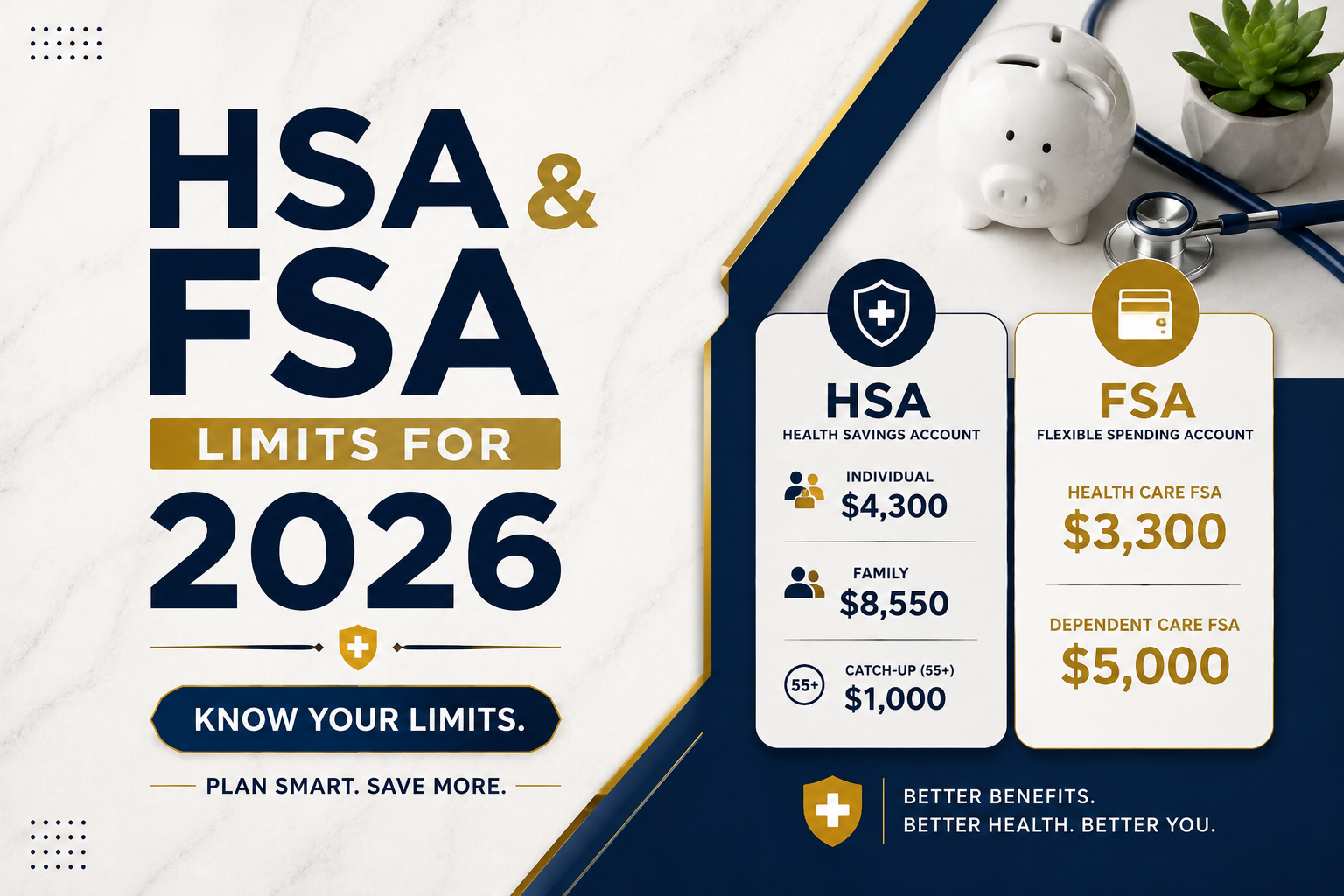
HSA and FSA Limits for 2026: What You Need to Know Health Savings Accounts (HSAs) and Flexible Spending Accounts (FSAs) continue to offer valuable tax advantages in 2026, helping individuals and families save money on qualified healthcare expenses. While both accounts provide tax benefits, they have different eligibility requirements, contribution limits, and rules. Understanding...

Last-Minute Retirement Tax Moves for 2026 As year-end approaches, retirement planning is one of the easiest ways to improve your 2026 tax position. Whether you’re an employee, self-employed, or business owner, taking advantage of retirement contribution opportunities before the deadlines can lower your taxable income and strengthen your long-term financial future. For 2026, retirement...

Copyright by Accu-Tax, Inc. All Rights Reserved.
Copyright by Accu-Tax, Inc. All Rights Reserved.