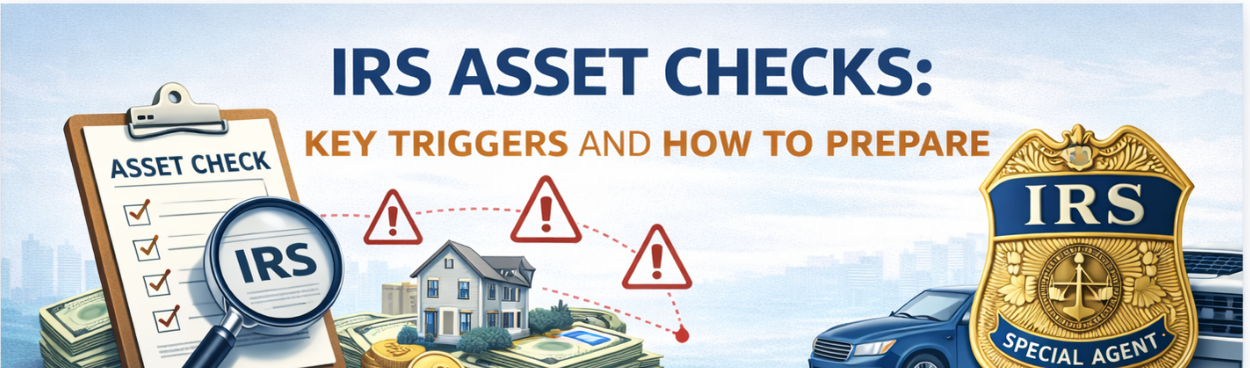
An IRS asset check is a process where the IRS reviews your financial and property holdings to determine your ability to pay outstanding tax debts or to verify information reported on your tax returns. Asset checks are used in both audits and collection cases. The IRS gathers information from your tax returns, third-party reports (like Forms 1099 and W-2), public records, and increasingly, advanced data analytics and artificial intelligence to identify assets you own or control.
Key Triggers for an IRS Asset Check
Several factors can prompt the IRS to conduct an asset check:
1. Large or Unpaid Tax Debts
If you owe a significant amount of back taxes, the IRS will often conduct an asset check to determine if you have the means to pay. This is standard in collection cases, especially before the IRS issues a levy or lien.
2. Unfiled or Inconsistent Returns
Failing to file required tax returns, or filing returns with income or asset information that doesn’t match third-party data, can trigger an asset review. The IRS uses sophisticated cross-referencing and AI to spot inconsistencies and missing information.
3. Audit Selection
If your return is selected for audit—especially if you have complex partnership, real estate, or private equity holdings—the IRS may conduct an asset check to verify reported income, deductions, and ownership of property.
4. Collection Actions
Before issuing a levy, garnishment, or pursuing other collection actions, the IRS will typically check for bank accounts, real estate, vehicles, retirement accounts, and other assets that could be seized to satisfy the debt.
5. Suspicious Activity or Whistleblower Tips
Unusual financial activity, large cash transactions, or tips from whistleblowers can prompt the IRS to investigate your assets more closely.
What Does the IRS Look For?
During an asset check, the IRS may review:
- Bank and investment accounts
- Real estate and property records
- Vehicles, boats, and other titled property
- Retirement accounts and pensions
- Business interests and partnership holdings
- Digital assets (such as cryptocurrency)
- Public records (liens, mortgages, UCC filings)
- Lifestyle indicators (large purchases, luxury items)
The IRS uses both internal data and external sources, including third-party information returns, public databases, and AI-driven analytics to identify undisclosed or underreported assets.
How to Prepare for an IRS Asset Check
1. Keep Accurate and Complete Records
Maintain up-to-date records of all your assets, including purchase documents, titles, account statements, and business interests. Good recordkeeping is your best defense in an audit or collection case.
2. Reconcile Your Tax Returns
Ensure that your tax returns accurately reflect your income, assets, and liabilities. Double-check that reported information matches third-party data (like Forms 1099, W-2, and K-1).
3. Disclose All Required Information
Failing to report foreign accounts, digital assets, or business interests can lead to severe penalties and increase the likelihood of an asset check.
4. Respond Promptly to IRS Notices
If you receive a notice or request for information, respond quickly and completely. Delays or incomplete responses can escalate the situation and prompt a deeper asset investigation.
5. Prepare for Questions About Large Transactions
Be ready to explain the source of funds for large deposits, purchases, or transfers. The IRS may ask for documentation to support your claims.
6. Consult a Tax Professional
If you have complex holdings or are facing an audit or collection action, seek advice from a qualified tax professional. They can help you organize your records, respond to IRS inquiries, and protect your rights.
What If the IRS Finds Undisclosed Assets?
If the IRS discovers assets you failed to report, you may face additional taxes, penalties, and interest. In cases of willful concealment or fraud, criminal charges are possible. Voluntary disclosure and prompt correction can sometimes mitigate penalties, but it’s best to address issues before the IRS finds them.
Key Takeaways
- IRS asset checks are triggered by unpaid taxes, audit selection, inconsistent returns, suspicious activity, and before collection actions.
- The IRS uses advanced data analytics and AI to identify assets, including bank accounts, real estate, business interests, and digital assets.
- Good recordkeeping, accurate reporting, and prompt responses are essential to minimize risk.
- If you’re concerned about an IRS asset check, consult a tax professional for guidance.