What Medical Expenses Count for HSA and FSA in 2026?
Health Savings Accounts (HSAs) and Health Flexible Spending Accounts (FSAs) can help lower your healthcare costs by allowing you to pay qualified medical expenses with tax-advantaged dollars.
While both accounts generally cover many of the same expenses, there are important differences—especially when it comes to insurance premiums and eligibility rules.
Here’s what qualifies in 2026.
What Is a Qualified Medical Expense?
For both HSAs and Health FSAs, qualified medical expenses are generally those that meet the IRS definition of “medical care” under Internal Revenue Code Section 213(d).
These expenses generally include costs for:
- Diagnosing diseases or medical conditions
- Treating or preventing illness
- Mitigating medical conditions
- Affecting the structure or function of the body
- Transportation primarily for medical care
- Qualified long-term care services (subject to IRS rules)
Common Medical Expenses That Usually Qualify
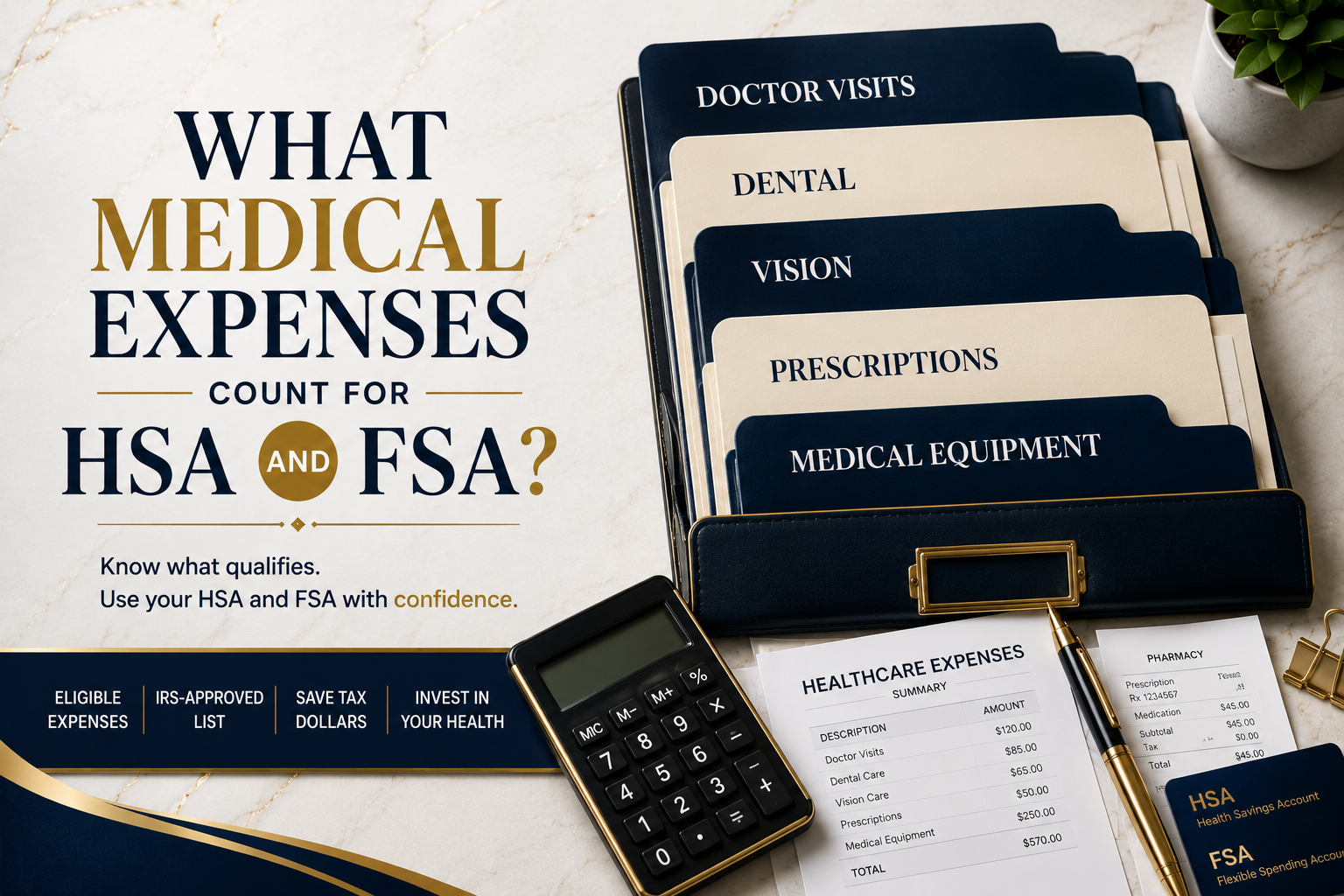
Both HSAs and Health FSAs generally cover a wide variety of healthcare expenses, including:
- Doctor office visits
- Hospital services
- Dental exams and treatments
- Eye exams and vision care
- Prescription medications
- Insulin
- Laboratory and diagnostic testing
- Transportation primarily for medical treatment
- Menstrual care products
- Over-the-counter medications
- Condoms
- Home COVID-19 tests
- Masks, hand sanitizer, and sanitizing wipes used for medical purposes
Routine preventive care such as annual physicals, dental cleanings, and eye examinations generally qualify because they are considered medical care under IRS rules.
Do Wellness Expenses Qualify?
Not always.
The IRS generally distinguishes between expenses that treat a diagnosed medical condition and those intended simply to improve general health.
Expenses that may qualify include:
- Nutritional counseling prescribed to treat conditions such as obesity or diabetes
- Weight-loss programs recommended to treat a diagnosed disease
- Physician-prescribed nutritional supplements used to treat a specific medical condition
- Certain medically necessary therapeutic exercise programs
Expenses that generally do not qualify include:
- General gym memberships
- Fitness classes for overall wellness
- Vitamins taken for general health
- Diet foods purchased for ordinary nutrition
- Vacations or wellness retreats
If food or beverages are prescribed as treatment for a medical condition, only the additional cost above normal food expenses may qualify.
Insurance Premium Rules
This is one of the biggest differences between HSAs and Health FSAs.
For HSAs, insurance premiums generally are not qualified medical expenses, except for certain limited situations, including:
- COBRA continuation coverage
- Qualified long-term care insurance
- Health coverage while receiving unemployment compensation
- Certain Medicare premiums after becoming Medicare eligible
- Eligible direct primary care arrangements
For Health FSAs, health insurance premiums generally cannot be reimbursed.
Expenses That Usually Do Not Qualify
Some expenses are specifically excluded from tax-free reimbursement, including:
- Cosmetic surgery performed solely for appearance
- General health or wellness products
- Most vitamins and supplements for everyday health
- Personal fitness expenses without a medical purpose
- Non-medical vacations or travel
Cosmetic procedures may qualify only when they are medically necessary to correct a congenital abnormality, injury, trauma, or disfiguring disease.
Important HSA and FSA Rules
- You generally cannot claim the same medical expense twice.
- If an expense is reimbursed by insurance, an HSA, an FSA, or another health reimbursement arrangement, you generally cannot deduct it again on your tax return.
- For HSAs, only expenses incurred after the HSA has been established generally qualify for tax-free reimbursement.
- HSA funds may generally be used for qualified expenses of the account holder, spouse, and eligible dependents.
- Some Health FSA plans may also reimburse eligible expenses for children under age 27, depending on the employer’s plan.
Final Thoughts
Both HSAs and Health FSAs cover many of the same qualified medical expenses, including doctor visits, prescriptions, dental care, vision care, and diagnostic services. However, certain expenses—such as insurance premiums, wellness programs, and cosmetic procedures—are subject to special IRS rules.
Understanding what qualifies can help you maximize your tax savings while avoiding unexpected taxes or penalties.
Need Help Maximizing Your Healthcare Tax Benefits?
Our CPA team helps individuals, families, and business owners make informed tax decisions that maximize deductions and take full advantage of tax-advantaged accounts like HSAs and Health FSAs.
Contact our CPA team today to schedule a consultation and discover personalized tax-saving strategies for 2026 and beyond.
Proactive tax planning today can help you save more on healthcare expenses tomorrow.