
Final IRS rules on 401(k) automatic enrollment: new plans must start employees at 3% to 10% and raise it yearly. See who is exempt and when the rules apply.
Final IRS rules on 401(k) automatic enrollment: new plans must start employees at 3% to 10% and raise it yearly. See who is exempt and when the rules apply.

The IRS FIRE system takes its last filings Nov. 19, 2026. Learn how to e-file 2026 Forms 1099 through IRIS, the new $2,000 threshold and the 2027 due dates.

Servers, bartenders and hourly workers may deduct up to $25,000 in tips and $12,500 in overtime on 2026 returns. See who qualifies, the limits and what to file.

IRS Applies Special Tax Rules to Cross-Border Corporate Acquisitions Cross-border mergers and acquisitions often involve complex U.S. tax rules that differ significantly from domestic business transactions. Even when shareholders receive mostly stock instead of cash, certain international acquisitions can trigger immediate U.S. tax consequences. The tax treatment depends largely on how the transaction is structured...

IRS Limits Advance Tax Rulings That Depend on Foreign Law Interpretation As more countries adopt new international tax rules, many businesses have asked whether foreign taxes qualify for U.S. Foreign Tax Credits. The IRS has made it clear that these questions generally cannot be answered with a blanket ruling. Instead, the tax treatment often depends...

IRS Generally Will Not Issue Advance Tax Rulings on Proposed Legislation Businesses and taxpayers often want to know how pending legislation could affect future tax planning. However, the IRS generally will not issue advance letter rulings or determination letters explaining the federal tax consequences of laws that have not yet been enacted. Instead, taxpayers must...

IRS Limits Advance Tax Rulings on Corporate Inversions Corporate inversions remain a major area of IRS scrutiny. These transactions generally involve a U.S. corporation or partnership restructuring under a foreign parent company, often with the goal of changing the group’s tax residence. Although the tax rules under Section 7874 remain in effect, the IRS generally...
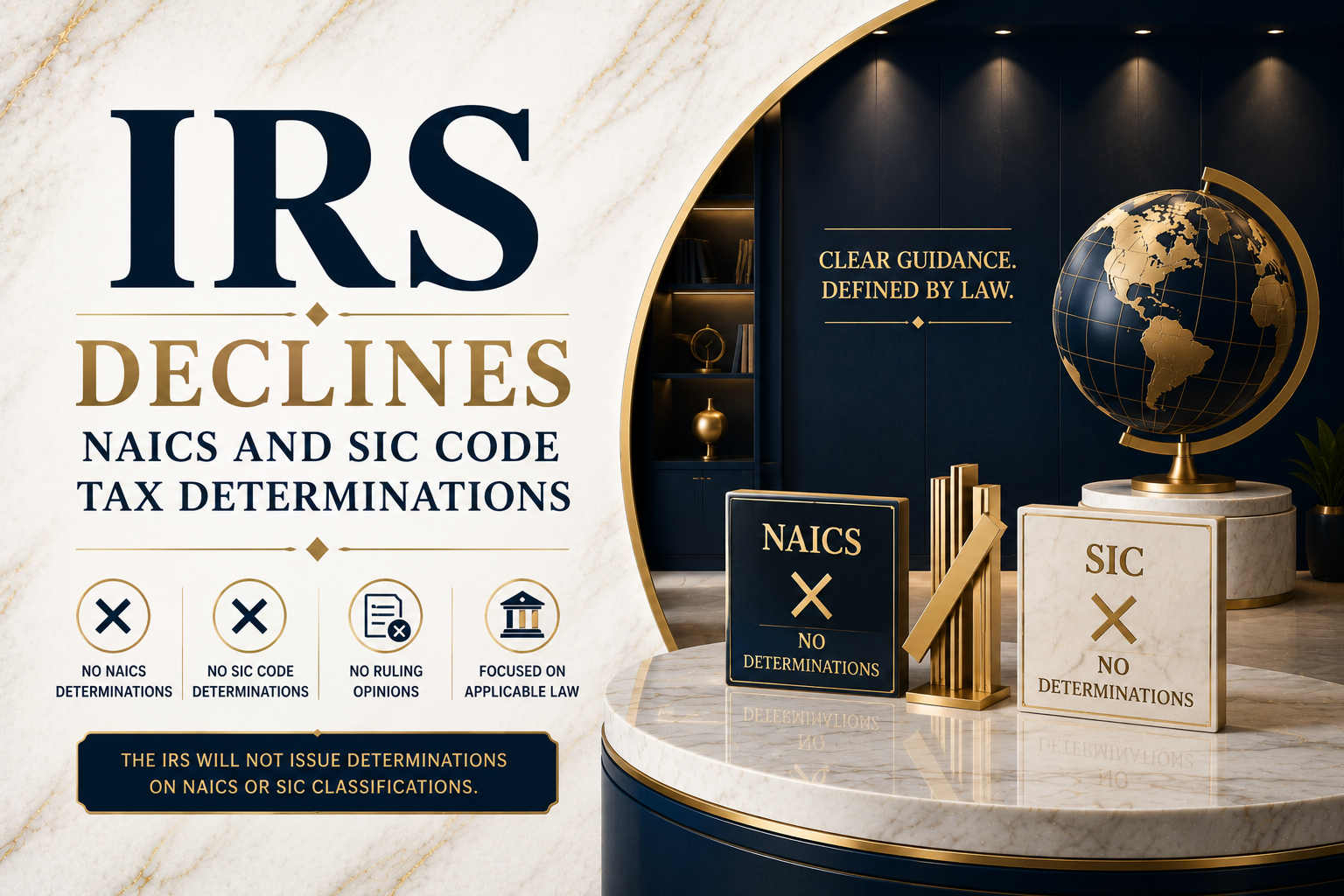
IRS Requires Consistent NAICS and SIC Business Classifications for Tax Reporting Business classification codes play an important role in federal tax reporting. Whether filing as a sole proprietor, corporation, or certain specialized entities, taxpayers are often required to identify their principal business activity using the North American Industry Classification System (NAICS). While the IRS uses...

IRS Generally Limits Advance Rulings on Business Purpose Determinations Many tax benefits depend on whether a transaction has a legitimate business purpose rather than being undertaken primarily to reduce taxes. While business purpose is an important concept throughout the Internal Revenue Code, the IRS generally does not issue advance rulings on whether a particular transaction...
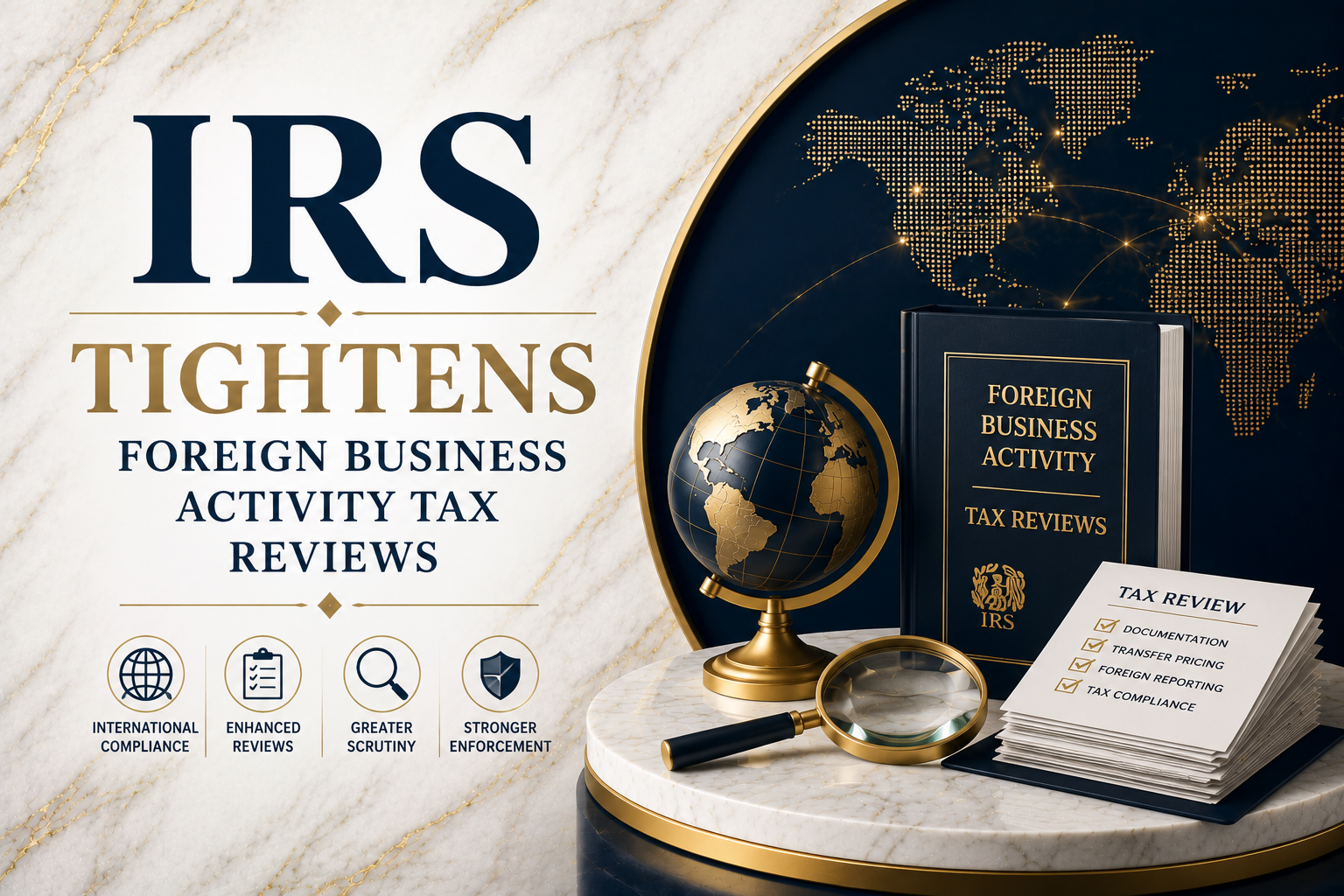
IRS Tightens Reviews of Foreign Business Activity Businesses with foreign subsidiaries, branches, related-party transactions, or overseas tax credits are facing more structured IRS review. The increased scrutiny is not based on one new law. Instead, it comes from changes in how the IRS selects, develops, and examines international tax issues. Large Business and International examination...

Copyright by Accu-Tax, Inc. All Rights Reserved.
Copyright by Accu-Tax, Inc. All Rights Reserved.