How to Calculate Estimated Taxes in 2026
If you earn income that isn’t subject to tax withholding—such as self-employment income, rental income, investment income, or freelance earnings—you may need to make quarterly estimated tax payments.
Calculating your estimated taxes correctly can help you avoid IRS underpayment penalties while preventing a large tax bill when you file your return.
Here’s a step-by-step guide to estimating your 2026 federal tax payments.
Who Needs to Pay Estimated Taxes?
Generally, you may need to make estimated tax payments if:
- You expect to owe at least $1,000 in federal tax after subtracting withholding and refundable credits.
- Your withholding and refundable credits will be less than the required annual payment under the IRS safe harbor rules.
This commonly applies to:
- Self-employed individuals
- Freelancers and independent contractors
- Small business owners
- Real estate investors
- Investors with significant taxable income
Step 1: Estimate Your Total 2026 Tax
Start by estimating your total federal tax liability for the year, including:
- Business income
- Investment income
- Rental income
- Wages
- Self-employment tax, if applicable
- Additional Medicare Tax or Net Investment Income Tax (NIIT), if applicable
Many taxpayers begin with the previous year’s tax return and adjust for expected income and current tax law changes.
Step 2: Subtract Withholding and Tax Credits
Next, subtract your expected:
- Federal income tax withholding
- Refundable tax credits
If the remaining balance is less than $1,000, you generally are not required to make estimated tax payments.
Step 3: Apply the IRS Safe Harbor Rules
To avoid underpayment penalties, your total withholding and estimated tax payments should generally equal the lesser of:
- 90% of your expected 2026 tax liability, or
- 100% of your 2025 total tax liability.
If your 2025 adjusted gross income (AGI) exceeded:
- $150,000 (or
- $75,000 if Married Filing Separately),
your prior-year safe harbor generally increases to 110% of your 2025 tax liability.
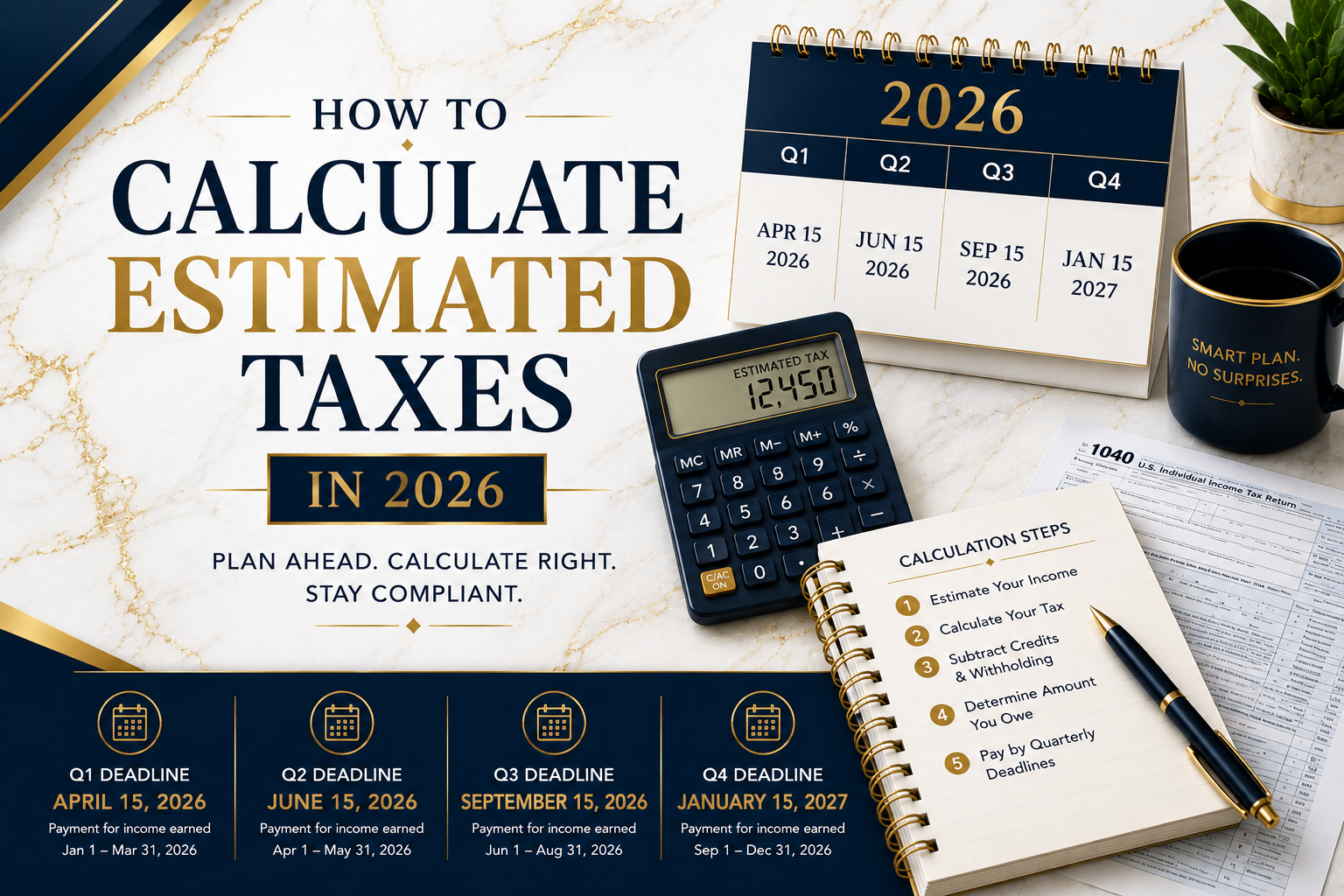
Step 4: Calculate Your Quarterly Payments
Subtract your expected withholding from the required annual payment.
The remaining amount is generally divided into four equal quarterly payments.
For most calendar-year taxpayers, the due dates are:
- April 15, 2026
- June 15, 2026
- September 15, 2026
- January 15, 2027
What If Your Income Changes During the Year?
If your income is seasonal or fluctuates significantly, you may benefit from using the Annualized Income Installment Method.
This method allows your estimated tax payments to better reflect when income is actually earned and may reduce underpayment penalties.
It is especially useful for:
- Seasonal businesses
- Commission-based professionals
- Real estate investors
- Freelancers with irregular income
Important Exceptions
You generally will not owe an estimated tax penalty if:
- Your remaining tax after withholding is less than $1,000.
- You had no federal tax liability in the prior year and met the IRS eligibility requirements.
- You file your 2026 federal tax return by January 31, 2027 and pay the full balance due instead of making the January estimated payment.
Special estimated tax rules also apply to:
- Farmers and fishermen
- Fiscal-year taxpayers
- Certain nonresident aliens
Key Takeaways
✔ Estimated taxes are generally required if you expect to owe at least $1,000 after withholding and refundable credits.
✔ Include income tax, self-employment tax, and other applicable federal taxes when estimating your liability.
✔ IRS safe harbor rules can help you avoid underpayment penalties.
✔ Quarterly payments are generally due in April, June, September, and January.
✔ The Annualized Income Installment Method may benefit taxpayers with uneven or seasonal income.
✔ Review your estimates throughout the year and adjust payments if your income changes.
Final Thoughts
Calculating estimated taxes doesn’t have to be complicated. Start by estimating your total 2026 tax liability, subtract expected withholding and credits, apply the IRS safe harbor rules, and divide the remaining amount into quarterly payments.
Reviewing your income throughout the year and adjusting your estimates as circumstances change can help you avoid underpayment penalties, improve cash flow, and eliminate surprises at tax time.
Need Help Calculating Your Estimated Taxes?
Our CPA team helps self-employed professionals, freelancers, investors, and business owners accurately calculate quarterly estimated tax payments, apply IRS safe harbor rules, and develop proactive tax strategies that minimize taxes and improve cash flow.
Contact our CPA team today to ensure your 2026 estimated tax payments are accurate, compliant, and optimized.
Proactive tax planning throughout the year can help you avoid penalties, reduce stress, and keep more of what you earn.