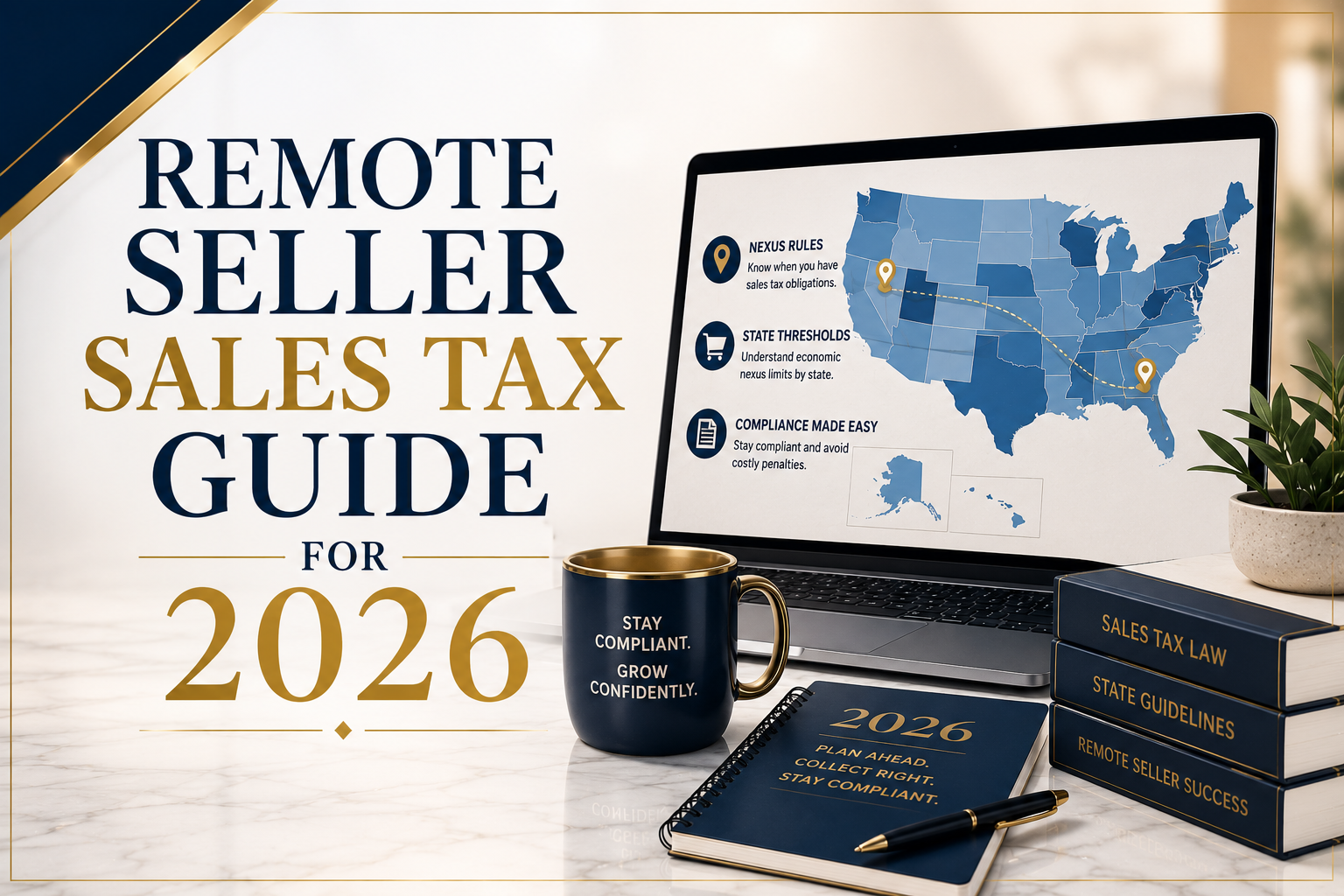
Remote Seller Sales Tax Guide for 2026
Selling products online across multiple states? Your sales tax responsibilities may extend far beyond where your business is located.
For 2026, remote sellers must evaluate sales tax obligations on a state-by-state basis. While most states now use economic nexus rules, physical presence can still create a tax obligation—even if your sales don’t meet economic thresholds.
Two Ways Your Business Can Create Sales Tax Nexus
1. Economic Nexus
Most states require remote sellers to collect sales tax after exceeding a specific sales threshold.
Common 2026 thresholds include:
- $100,000 in annual sales (most states)
- $100,000 plus 200 transactions (still used by several states)
- $250,000 (Alabama and Mississippi)
- $500,000 (California and Texas)
- New York: More than $500,000 in sales and more than 100 transactions
2. Physical Presence Nexus
Your business may also owe sales tax if you have:
- An office or business location
- Employees or sales representatives
- Inventory stored in the state
- A warehouse or third-party fulfillment center
- Company vehicles making deliveries
- Installation or repair services performed in the state
Even small physical connections can trigger registration requirements.
Not Every State Uses the Same Rules
Economic nexus isn’t based solely on the dollar threshold.
States also differ in:
- Whether they count gross sales, retail sales, or taxable sales
- Whether transaction-count thresholds still apply
- The measurement period used to determine nexus
Some states review the previous calendar year, while others use rolling 12-month periods or quarterly testing.
2026 Illinois Update
Illinois made an important change beginning January 1, 2026.
- The 200-transaction threshold has been eliminated.
- Remote sellers now generally qualify based solely on $100,000 in cumulative gross receipts.
- The threshold is reviewed quarterly using the previous 12-month period.
This change simplifies the nexus test but makes ongoing sales tracking even more important.
States Without a General Sales Tax
These states do not impose a statewide sales tax:
- Delaware
- Montana
- New Hampshire
- Oregon
They do not have general statewide economic nexus thresholds for sales tax collection.
Best Practices for Remote Sellers
- ✔ Monitor sales in every state where you have customers.
- ✔ Review both economic and physical nexus rules.
- ✔ Track whether states count gross, taxable, or retail sales.
- ✔ Register promptly once nexus is established.
- ✔ Understand whether a marketplace facilitator collects tax on your behalf.
Bottom Line
Most remote sellers focus only on sales thresholds, but physical presence, inventory, fulfillment centers, and changing state rules can also create tax obligations. Because every state applies its own nexus standards, regular monitoring is essential for staying compliant and avoiding penalties.
Need Help Managing Multi-State Sales Tax?
Our CPA team can help determine where your business has nexus, register in the appropriate states, and ensure you’re meeting your sales tax filing requirements as your business grows.
Contact us today to simplify your 2026 sales tax compliance.
Proactive sales tax planning today can help your business avoid costly penalties and stay compliant as you grow.