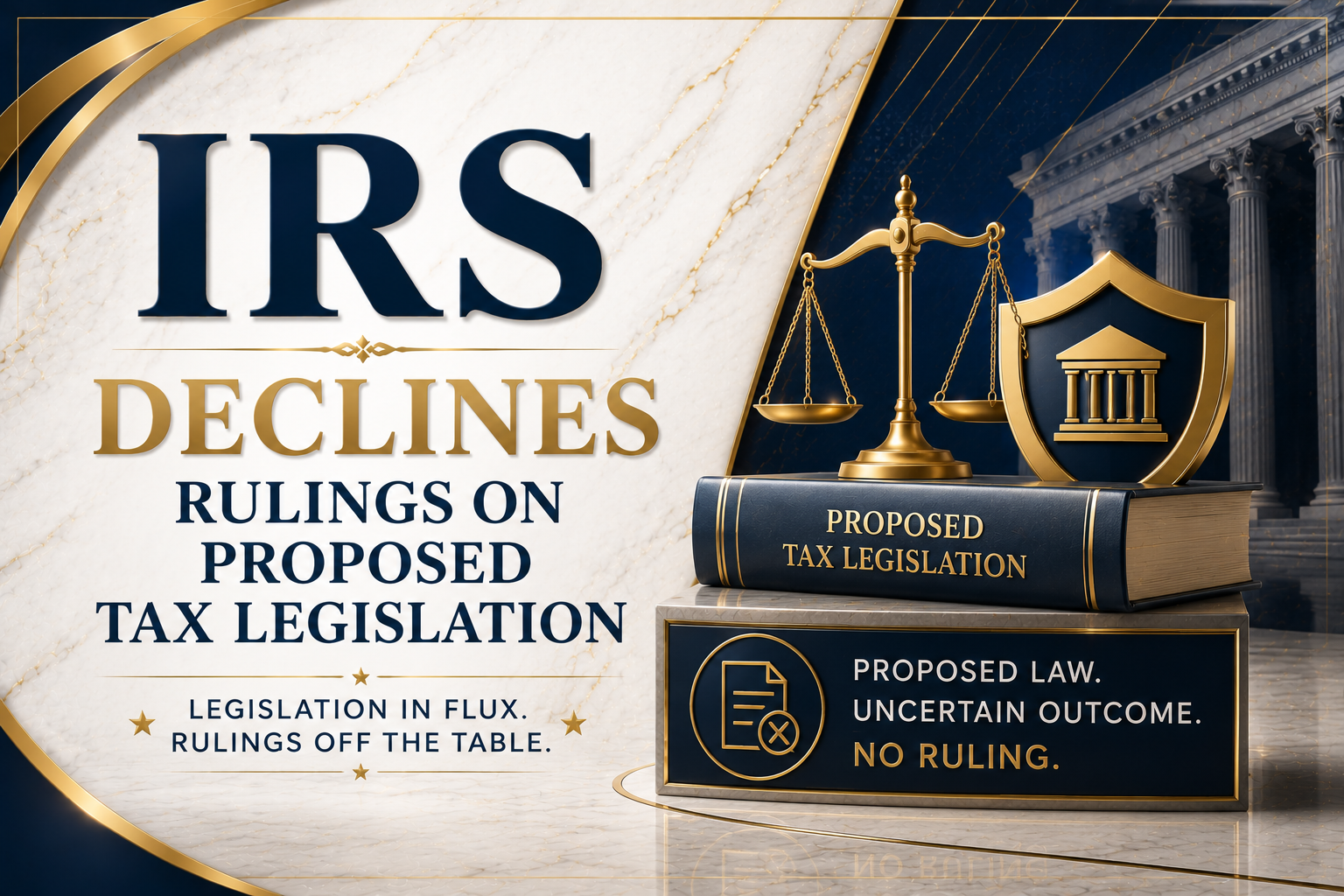
IRS Generally Will Not Issue Rulings on Proposed Tax Legislation
Businesses and taxpayers often want to know how pending legislation could affect their tax planning. However, the IRS generally does not issue advance rulings on the federal tax consequences of laws that have not yet been enacted.
This policy helps ensure that tax guidance is based on existing law rather than proposals that may change before becoming law.
Why the IRS Declines These Rulings
Tax legislation frequently changes during the legislative process. Because proposed bills may be amended, delayed, or never enacted, the IRS generally will not provide binding guidance based on uncertain future law.
Instead, official rulings are typically limited to tax issues governed by current statutes and regulations.
What This Means for Taxpayers
If a tax planning strategy depends on pending legislation, taxpayers generally should not expect to receive an IRS private letter ruling confirming the future tax treatment.
Instead, planning decisions should be based on existing law while remaining flexible enough to adapt if new legislation is enacted.
General Guidance May Still Be Available
Although the IRS generally does not issue binding rulings on proposed legislation, it may still publish general information, educational materials, or administrative guidance to help taxpayers understand current law and prepare for possible future changes.
Monitor Legislative Developments
Businesses affected by proposed tax bills should closely monitor legislative activity. Once new laws are enacted, the IRS may issue regulations, notices, revenue procedures, or other guidance explaining how the changes will be administered.
Final Thoughts
Tax planning should be grounded in current law, not anticipated legislation. While proposed tax bills may create future planning opportunities, taxpayers should avoid making major decisions based solely on legislation that has not yet become law.
Unsure how proposed tax changes could affect your business? Our CPA team can help evaluate your current tax position, monitor legislative developments, and prepare strategies that keep you ready for future tax law changes while remaining compliant with existing IRS rules.