IRS Limits Advance Determinations on Foreign Estates and Trusts
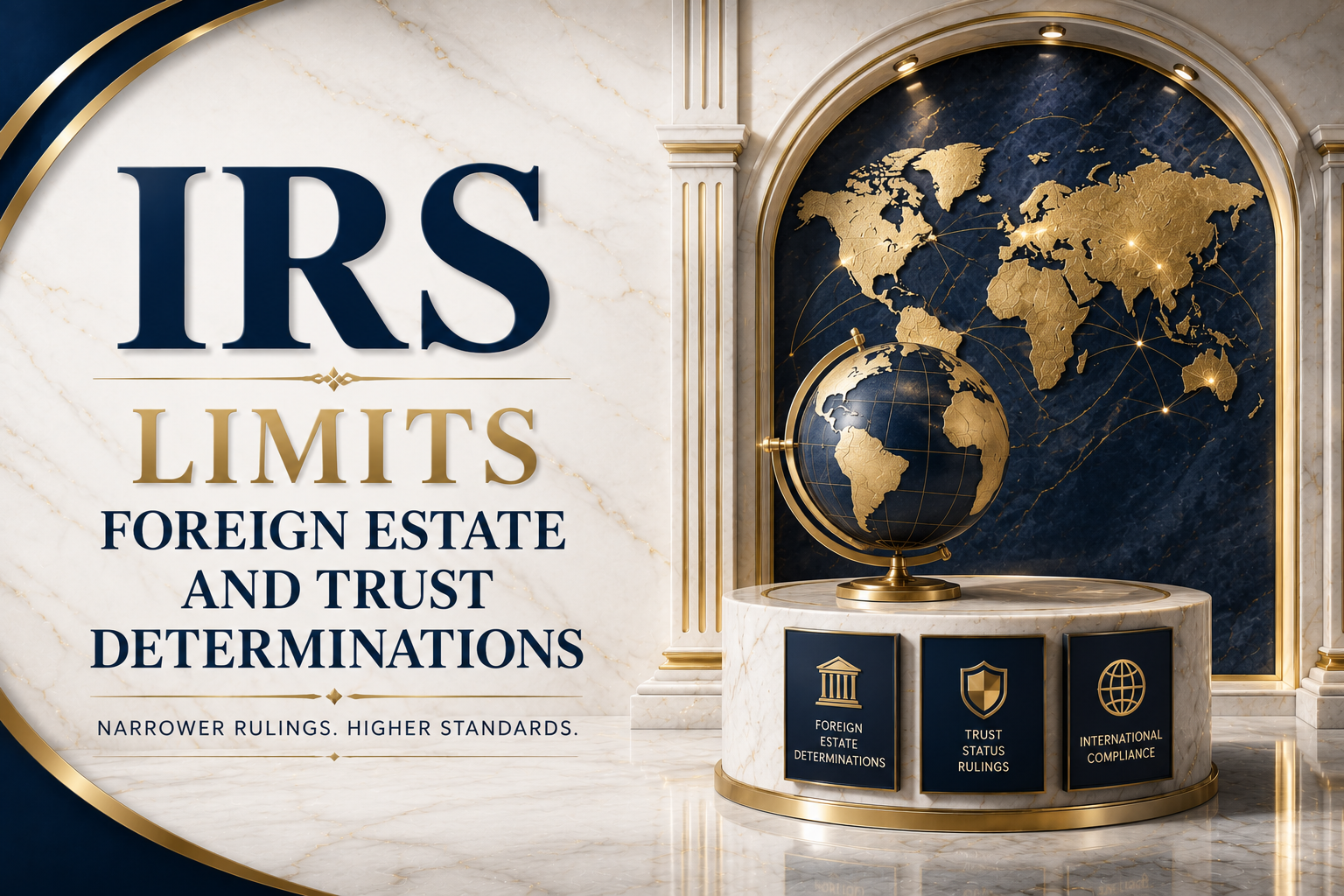
Determining whether an estate or trust is considered foreign or domestic for U.S. tax purposes can have significant reporting and tax consequences. However, taxpayers generally cannot obtain advance IRS rulings on this classification.
Instead, the IRS applies detailed statutory rules that require careful analysis of the specific facts.
Why Classification Matters
Whether an estate or trust is classified as foreign or domestic affects filing obligations, income taxation, reporting requirements, and other international tax rules.
An incorrect classification can result in compliance issues and unexpected tax consequences.
How the IRS Determines Trust Status
For trusts, the IRS generally applies two key tests:
- Court Test: A U.S. court must be able to exercise primary supervision over the administration of the trust.
- Control Test: One or more U.S. persons must control all substantial decisions of the trust.
A trust that fails either test is generally treated as a foreign trust for federal tax purposes.
Foreign Estate Rules
Estates are subject to a different set of statutory rules. The IRS considers specific tax law requirements when determining whether an estate is foreign or domestic, making the analysis dependent on the estate’s overall tax status.
Advance IRS Guidance Is Limited
The IRS generally does not issue advance letter rulings or determination letters on whether an estate or trust qualifies as foreign for federal income tax purposes. As a result, taxpayers and advisors must rely on the applicable statutes and regulations when making the classification.
Why Professional Review Is Important
Because these determinations often involve international assets, trustees, beneficiaries, and cross-border administration, careful planning and documentation are essential to avoid reporting errors and potential penalties.
Final Thoughts
Foreign estate and trust classifications are governed by detailed legal standards rather than simple checklists. Understanding the court test, control test, and applicable estate rules is essential for proper U.S. tax compliance.
Managing an international estate or trust? Our CPA team can help determine the proper tax classification, review your reporting obligations, and develop a compliance strategy that aligns with current IRS regulations.