Standard Mileage vs. Actual Expenses in 2026: Which Method Saves You More?
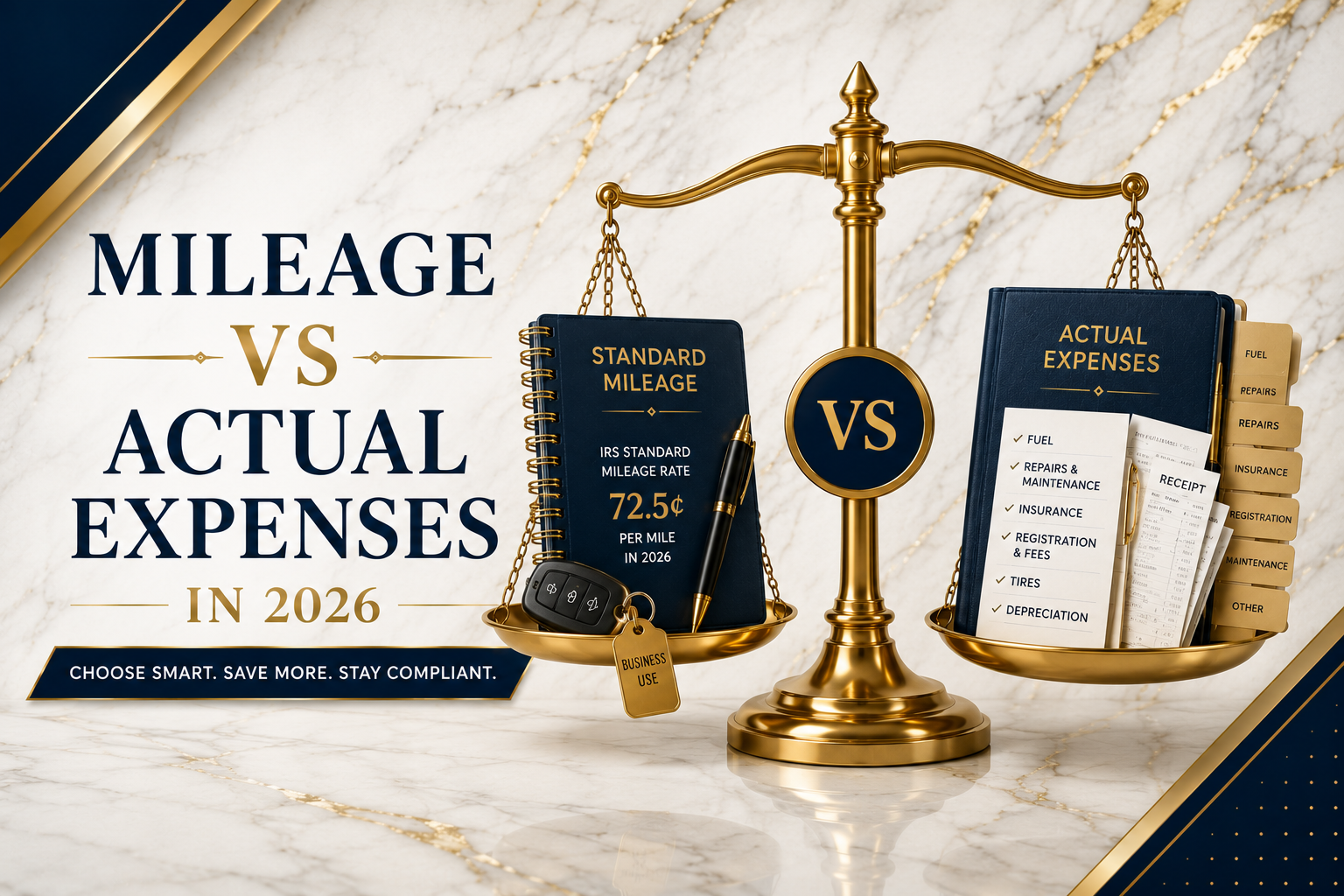
If you use your vehicle for business, choosing the right deduction method can significantly impact your tax savings. For 2026, eligible business owners can generally choose between the standard mileage method and the actual expense method.
While both methods allow you to deduct business vehicle costs, they differ in eligibility, recordkeeping requirements, and the amount you may ultimately deduct.
Here’s what you need to know before deciding which method is best for your business.
What Is the 2026 Standard Mileage Rate?
For transportation expenses paid or incurred on or after January 1, 2026, the IRS standard business mileage rate is:
72.5 cents per business mile.
This optional method simplifies your deduction by allowing you to multiply your business miles by the IRS mileage rate instead of tracking every vehicle expense.
How the Standard Mileage Method Works
Using the standard mileage method is simple:
- Track your total business miles.
- Multiply those miles by 72.5 cents.
- Add deductible business parking fees and tolls separately.
The standard mileage rate already includes many vehicle operating costs, including:
- Gas and oil
- Repairs and maintenance
- Insurance
- Registration fees
- Depreciation
- Lease costs
Because these costs are built into the mileage rate, they generally cannot be deducted separately.
For 2026, 35 cents per mile of the standard mileage rate is treated as depreciation for tax purposes.
When You Cannot Use the Standard Mileage Method
You generally cannot use the standard mileage method if you:
- Operate five or more vehicles simultaneously in your business.
- Previously claimed Section 179 expensing on the vehicle.
- Previously claimed bonus depreciation on the vehicle.
- Used certain accelerated depreciation methods.
- Previously used the actual expense method on a leased vehicle.
For owned vehicles, you generally must choose the standard mileage method in the first year the vehicle is available for business use if you want the flexibility to continue using it in later years.
How the Actual Expense Method Works
Instead of using the IRS mileage rate, the actual expense method allows you to deduct the business-use percentage of your actual vehicle costs.
Eligible expenses may include:
- Fuel
- Oil changes
- Repairs
- Tires
- Insurance
- Registration and license fees
- Lease payments
- Garage rent
- Depreciation
- Business parking fees and tolls
If your vehicle is used for both business and personal purposes, only the business-use percentage is deductible.
Example:
If you drove 20,000 total miles during the year and 12,000 miles were for business, you may generally deduct 60% of your eligible vehicle expenses.
Which Method Usually Saves More?
The Standard Mileage Method may be better if you:
- Want simpler recordkeeping.
- Drive a fuel-efficient or lower-cost vehicle.
- Have relatively low operating expenses.
- Qualify to use the method from the first year.
The Actual Expense Method may be better if you:
- Drive an expensive vehicle.
- Have high repair or maintenance costs.
- Pay significant insurance premiums.
- Want to deduct depreciation or lease payments directly.
- Use your vehicle heavily for business.
The best choice depends on your individual circumstances, and calculating your deduction under both methods can help determine which provides the greater tax benefit.
Keep Good Mileage Records
Regardless of which deduction method you choose, the IRS requires documentation to support your claim.
Your records should include:
- Date of each trip
- Starting and ending locations
- Business purpose
- Business miles driven
- Total annual mileage
- Date the vehicle was first used for business
Accurate records are essential if your deduction is ever questioned during an IRS examination.
Key Takeaways
✔ The 2026 standard mileage rate is 72.5 cents per business mile.
✔ The mileage method includes most operating costs, including depreciation.
✔ The actual expense method allows you to deduct the business portion of actual vehicle expenses.
✔ Certain taxpayers may not qualify to use the standard mileage method.
✔ Comparing both methods can help maximize your tax deduction.
✔ Detailed mileage and expense records are essential for IRS compliance.
Final Thoughts
For 2026, the standard mileage method offers a simple deduction based on business miles driven, while the actual expense method may produce greater tax savings for businesses with higher vehicle costs.
Choosing the right method depends on your driving habits, vehicle expenses, and long-term tax strategy. Reviewing both options before filing your return can help ensure you claim the largest deduction available.
Need Help Choosing the Best Vehicle Deduction?
Our CPA team helps business owners, self-employed professionals, freelancers, contractors, and real estate investors determine the most tax-efficient way to deduct vehicle expenses, maintain IRS-compliant mileage records, and maximize every available deduction.
Contact our CPA team today to discover which vehicle deduction method can save your business the most in 2026 and beyond.
Choosing the right deduction method today can lead to significant tax savings tomorrow.