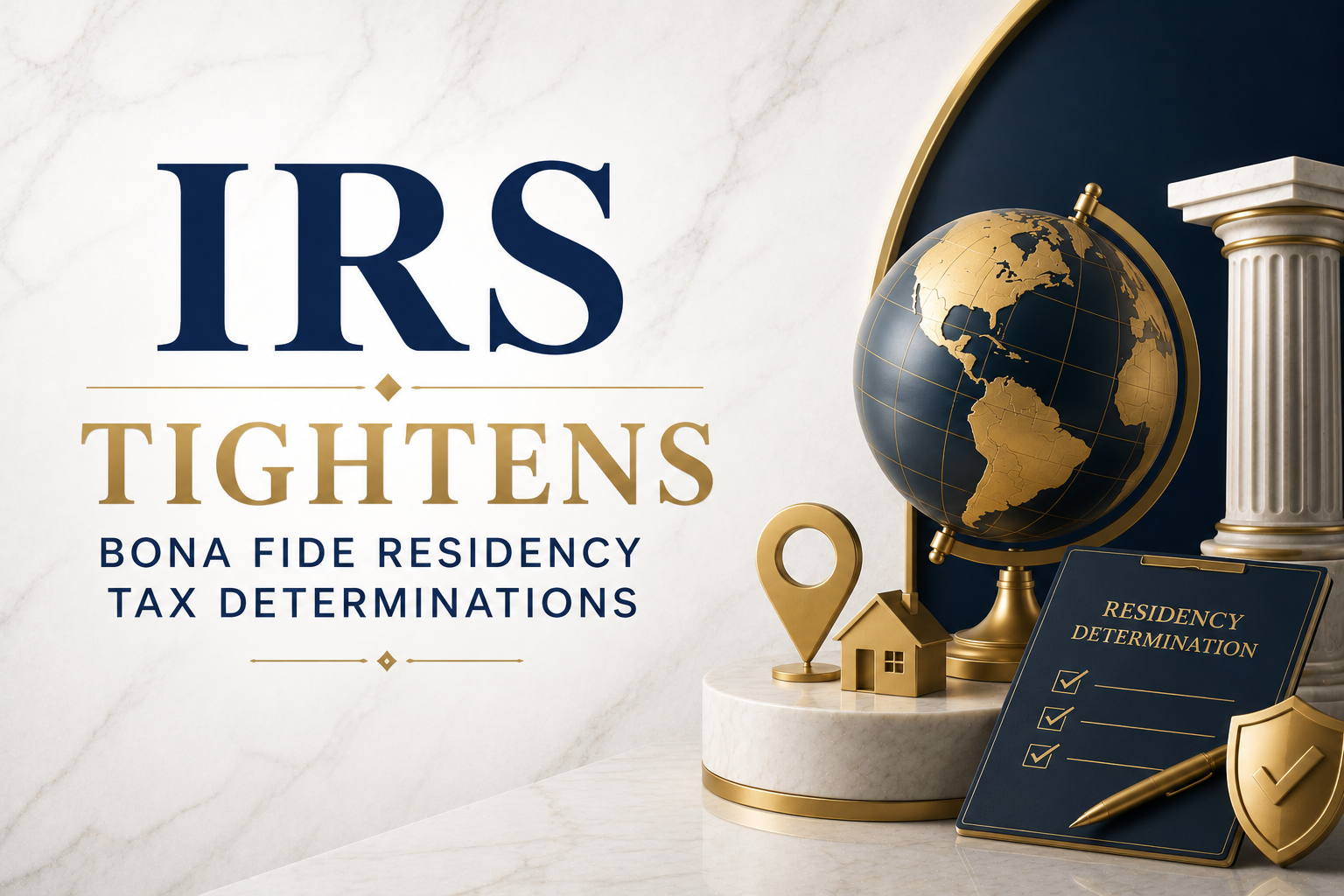
IRS Applies Structured Rules for Bona Fide Residency in U.S. Possessions
Individuals who move to a U.S. possession, such as Puerto Rico, Guam, the U.S. Virgin Islands, American Samoa, or the Northern Mariana Islands, may qualify for special U.S. tax treatment. However, claiming bona fide residency requires meeting specific IRS requirements.
Today’s rules use a structured three-part test that is much more objective than the older facts-and-circumstances approach.
The Three-Part Residency Test
To be treated as a bona fide resident of a U.S. possession for tax purposes, an individual generally must satisfy all three of the following tests:
- Presence test
- Tax home test
- Closer connection test
Meeting only one of these requirements is not enough. All three tests must be satisfied for the applicable tax year.
The Presence Test
The presence test measures the amount of time an individual spends in the possession during the year.
Many taxpayers qualify by spending at least 183 days in the possession, but the IRS also provides several alternative ways to satisfy the test under certain circumstances.
In addition, limited exceptions may apply for situations such as medical treatment, natural disasters, government service, qualifying travel, and other special circumstances.
Tax Home and Closer Connection Tests
The tax home test generally requires that your principal place of business or employment be located in the possession.
The closer connection test examines where your strongest personal and economic ties exist. The IRS may consider factors such as:
- Your permanent home
- Family connections
- Banking relationships
- Voter registration
- Driver’s license and other government records
- Where you conduct your day-to-day life
These factors help determine whether your primary connection is truly with the possession rather than the United States or another country.
Residency Determinations Have Become More Objective
Current residency rules provide clearer standards than earlier guidance, replacing a broad facts-and-circumstances analysis with specific statutory tests. While later guidance introduced limited flexibility in counting certain days of presence, taxpayers must still carefully document their residency throughout the year.
Final Thoughts
Establishing bona fide residency in a U.S. possession involves much more than meeting a simple day-count requirement. Proper planning, documentation, and understanding each residency test are essential to qualifying for the available tax benefits.
Planning to relocate to Puerto Rico or another U.S. possession? Our CPA team can evaluate your residency status, help you satisfy the IRS requirements, and develop a tax strategy that supports your long-term compliance and planning goals.