C-Corp vs. LLC: Which Saves More Tax in 2026?
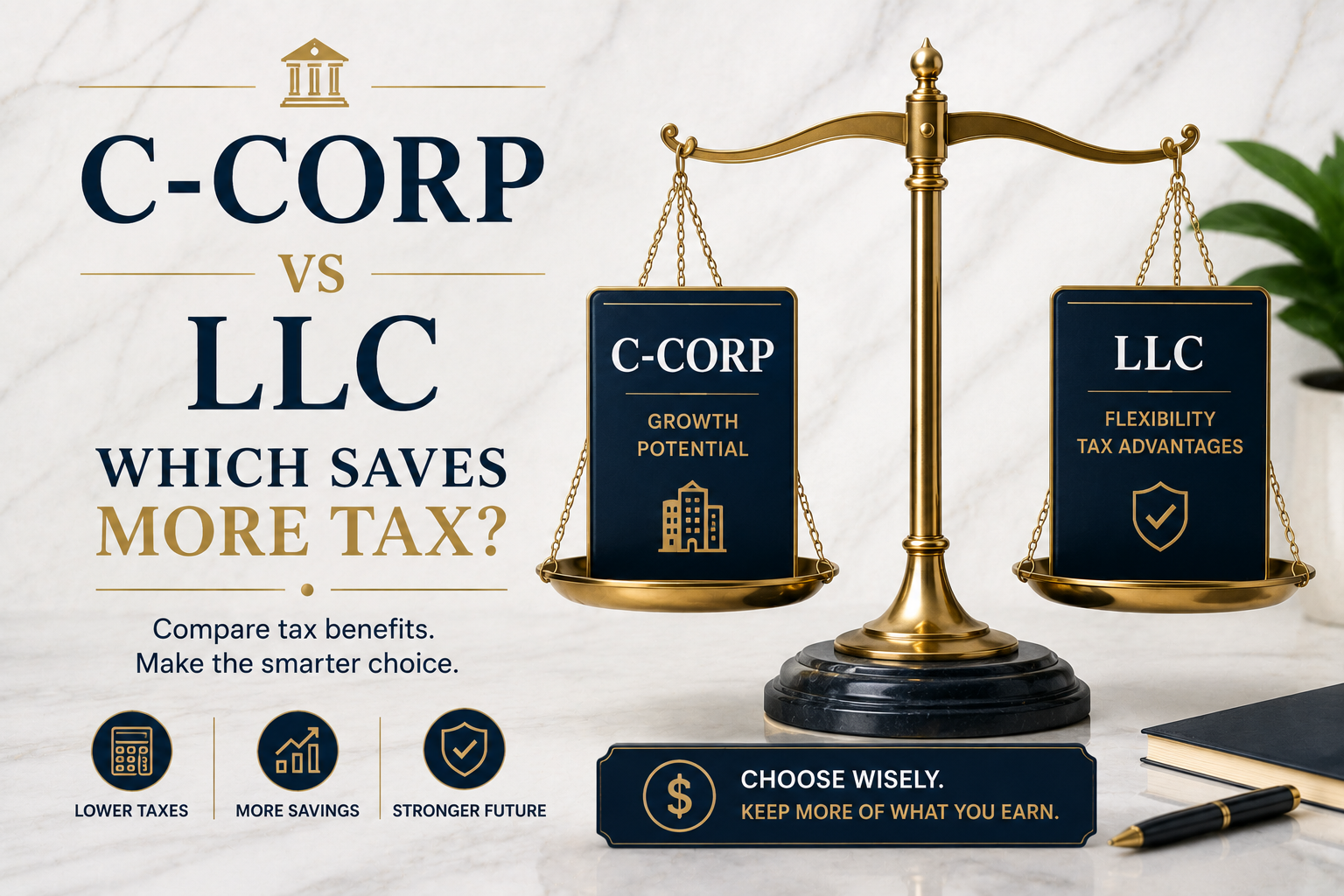
One of the most common questions business owners ask is whether an LLC or a C corporation saves more on taxes. The answer is not as simple as choosing one structure over the other.
An LLC is a legal business entity created under state law, while a C corporation is a federal tax classification. An LLC can even elect to be taxed as a C corporation if that better fits the business’s tax strategy.
In 2026, there is no universal winner. The better option depends on how your business earns, retains, and distributes its profits.
Understanding LLC Taxation
By default, the IRS taxes an LLC based on the number of owners.
- A single-member LLC is generally treated as a disregarded entity.
- A multi-member LLC is generally taxed as a partnership.
- An LLC may elect to be taxed as a C corporation if desired.
Under the default rules, business income generally passes directly to the owners, who report it on their individual tax returns.
How a C Corporation Is Taxed
A C corporation is a separate taxpayer.
The corporation reports its income, claims business deductions, and pays corporate income tax. If profits are later distributed to shareholders as dividends, those distributions may also be taxed at the shareholder level.
This is commonly referred to as double taxation.
When an LLC May Save More Tax
A default LLC structure often provides greater tax efficiency when:
- Profits will be distributed to the owners each year.
- The business expects startup losses.
- Owners prefer a single level of federal taxation.
- Flexibility in ownership and operations is important.
Because income generally passes directly to the owners, there is typically no separate federal income tax at the entity level.
When a C Corporation May Save More Tax
A C corporation may provide advantages when:
- Profits will remain in the business for future growth.
- The company plans significant reinvestment.
- Owners do not need immediate distributions.
- The business is capital-intensive and expects ongoing expansion.
Since corporate profits may be retained inside the company, some businesses can benefit from the lower corporate tax rate before shareholder-level tax becomes relevant.
Important Factors to Consider
Choosing a C corporation solely because of its tax rate can be misleading.
Business owners should also consider:
- The potential for double taxation on dividends.
- Rules governing accumulated earnings.
- Potential personal holding company tax.
- The tax consequences of converting back to pass-through taxation in the future.
Changing a business’s tax classification later can trigger significant tax consequences, making long-term planning essential.
Questions to Ask Before Choosing
Before selecting a tax structure, consider:
- Will profits be distributed or retained?
- Do you expect profits or losses in the next few years?
- Do you have one owner or multiple owners?
- Do you expect to sell the business in the future?
- What is your current personal tax bracket?
The answers to these questions often have a greater impact on tax savings than the entity itself.
Final Thoughts
In 2026, neither an LLC nor a C corporation automatically produces lower taxes. A pass-through LLC is often advantageous for businesses that distribute profits and value tax simplicity, while a C corporation may be beneficial for businesses planning to retain earnings and reinvest for long-term growth.
The best choice depends on your business goals, ownership structure, expected income, and future plans—not simply the tax rate.
Need Help Choosing the Best Business Structure?
As a CPA firm, we help entrepreneurs and business owners evaluate whether an LLC, C corporation, or another entity structure provides the greatest tax advantages based on their unique financial situation.
Whether you’re starting a business, restructuring an existing company, or planning for future growth, our experienced CPA team can help you choose the entity that supports both your tax strategy and long-term business goals.
Contact our CPA team today to schedule a consultation and develop a personalized tax plan for your business in 2026 and beyond.
Choosing the right entity today can lead to meaningful tax savings and greater financial flexibility in the future.