How Much Can You Put in an IRA in 2026?
Contributing to an Individual Retirement Account (IRA) is one of the simplest ways to save for retirement while potentially reducing your tax bill. Whether you contribute to a Traditional IRA, a Roth IRA, or both, understanding the 2026 contribution limits and income restrictions can help you maximize your retirement savings and avoid excess contribution penalties.
Here’s what you should know before making your 2026 IRA contributions.
2026 IRA Contribution Limits
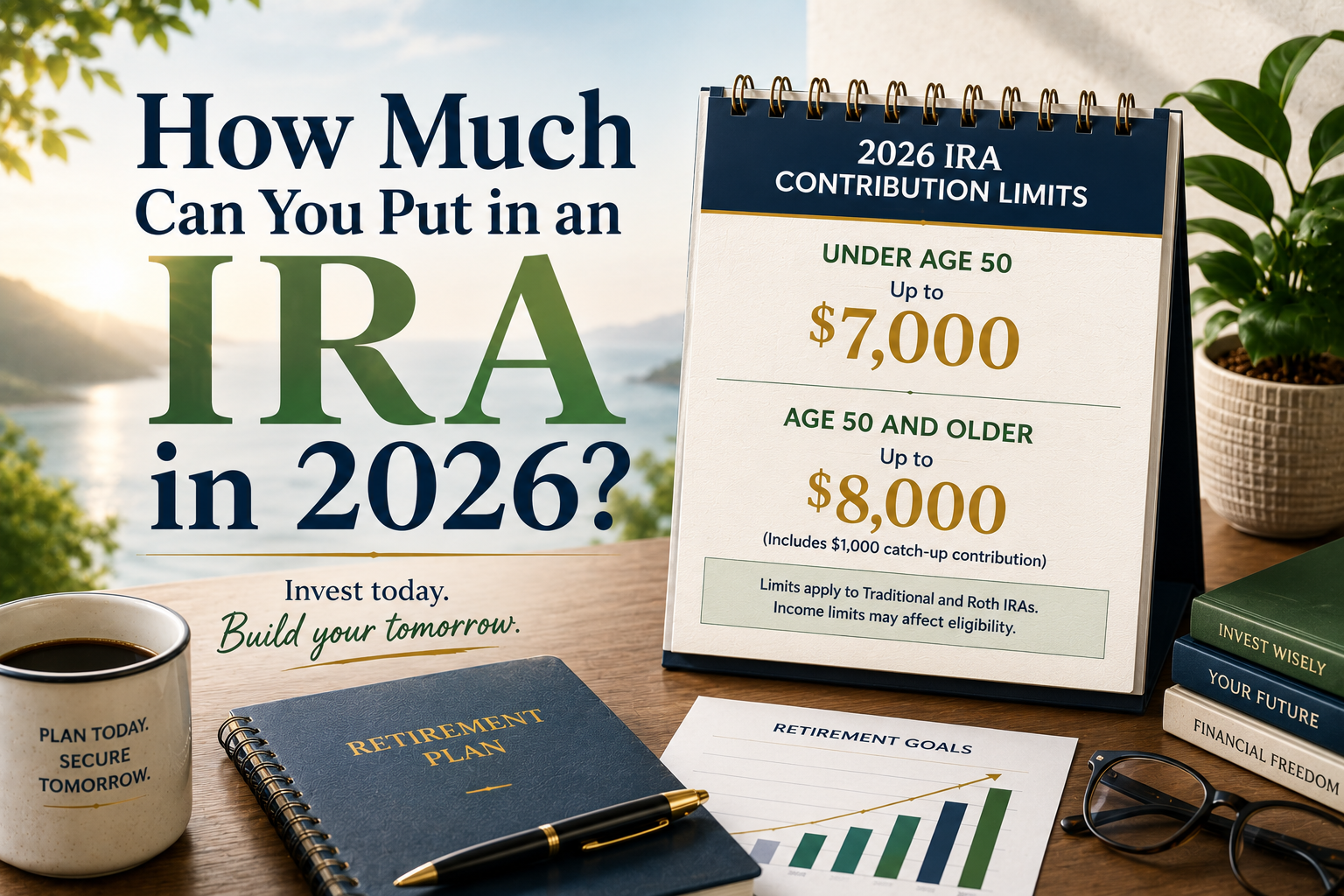
For the 2026 tax year, the maximum amount you can contribute to all of your IRAs combined is:
- $7,500 if you are under age 50.
- $8,600 if you are age 50 or older by the end of 2026, including the $1,100 catch-up contribution.
These limits apply to your combined contributions across all Traditional and Roth IRAs—you cannot contribute the maximum amount to each account separately.
Your Contributions Cannot Exceed Your Compensation
Even if the annual contribution limit is higher, your IRA contribution generally cannot exceed your taxable compensation for the year.
Compensation generally includes:
- Wages and salaries
- Self-employment income
- Commissions
- Bonuses
- Taxable alimony (for qualifying agreements)
If your earned income is less than the annual contribution limit, your maximum IRA contribution is generally limited to the amount of your compensation.
Traditional IRA Deduction Limits
Although many taxpayers can contribute to a Traditional IRA, your ability to deduct those contributions may be limited if you or your spouse are covered by a workplace retirement plan.
For 2026, the deduction phases out at the following modified adjusted gross income (MAGI) ranges:
- Single or Head of Household: $81,000–$91,000
- Married Filing Jointly (covered spouse): $129,000–$149,000
- Married Filing Jointly (spouse not covered): $242,000–$252,000
- Married Filing Separately: $0–$10,000
If your income falls within or above these ranges, your deductible contribution may be reduced or eliminated.
Roth IRA Income Limits
Your ability to contribute directly to a Roth IRA also depends on your modified adjusted gross income.
For 2026, Roth IRA contributions begin to phase out at:
- Single or Head of Household: $153,000–$168,000
- Married Filing Jointly: $242,000–$252,000
- Married Filing Separately (lived with spouse): $0–$10,000
If your income exceeds these ranges, your allowable Roth IRA contribution may be reduced or eliminated.
Can You Contribute to Both a Traditional and Roth IRA?
Yes—but your combined contributions cannot exceed your annual IRA contribution limit.
For example, if you’re under age 50, you could contribute:
- $3,500 to a Traditional IRA, and
- $4,000 to a Roth IRA.
Your combined contribution would equal the annual maximum of $7,500.
Why Contribute to an IRA?
IRAs offer valuable long-term tax benefits, including:
- Potential tax deductions with Traditional IRAs
- Tax-free qualified withdrawals from Roth IRAs
- Tax-deferred investment growth
- Additional retirement savings beyond employer-sponsored plans
The right IRA strategy depends on your income, current tax bracket, retirement goals, and eligibility requirements.
Final Thoughts
For 2026, most taxpayers can contribute up to $7,500 to their IRAs, or $8,600 if they are age 50 or older. However, income limits, workplace retirement plan coverage, and compensation rules may affect your eligibility to deduct Traditional IRA contributions or contribute directly to a Roth IRA.
Reviewing your retirement strategy before making contributions can help you maximize available tax benefits while remaining compliant with IRS rules.
Need Help Choosing the Right IRA Strategy?
As a CPA firm, we help individuals, families, and business owners make informed retirement planning decisions while maximizing available tax benefits.
Whether you’re deciding between a Traditional IRA and a Roth IRA, determining contribution eligibility, or creating a long-term retirement strategy, our experienced CPA team can help you make the most of every retirement savings opportunity.
Contact our CPA team today to schedule a consultation and develop a retirement plan that supports your financial goals while minimizing your taxes in 2026 and beyond.
Smart retirement planning today can lead to greater tax savings and financial security tomorrow.