IRS Generally Will Not Issue Advance Tax Rulings on Proposed Legislation
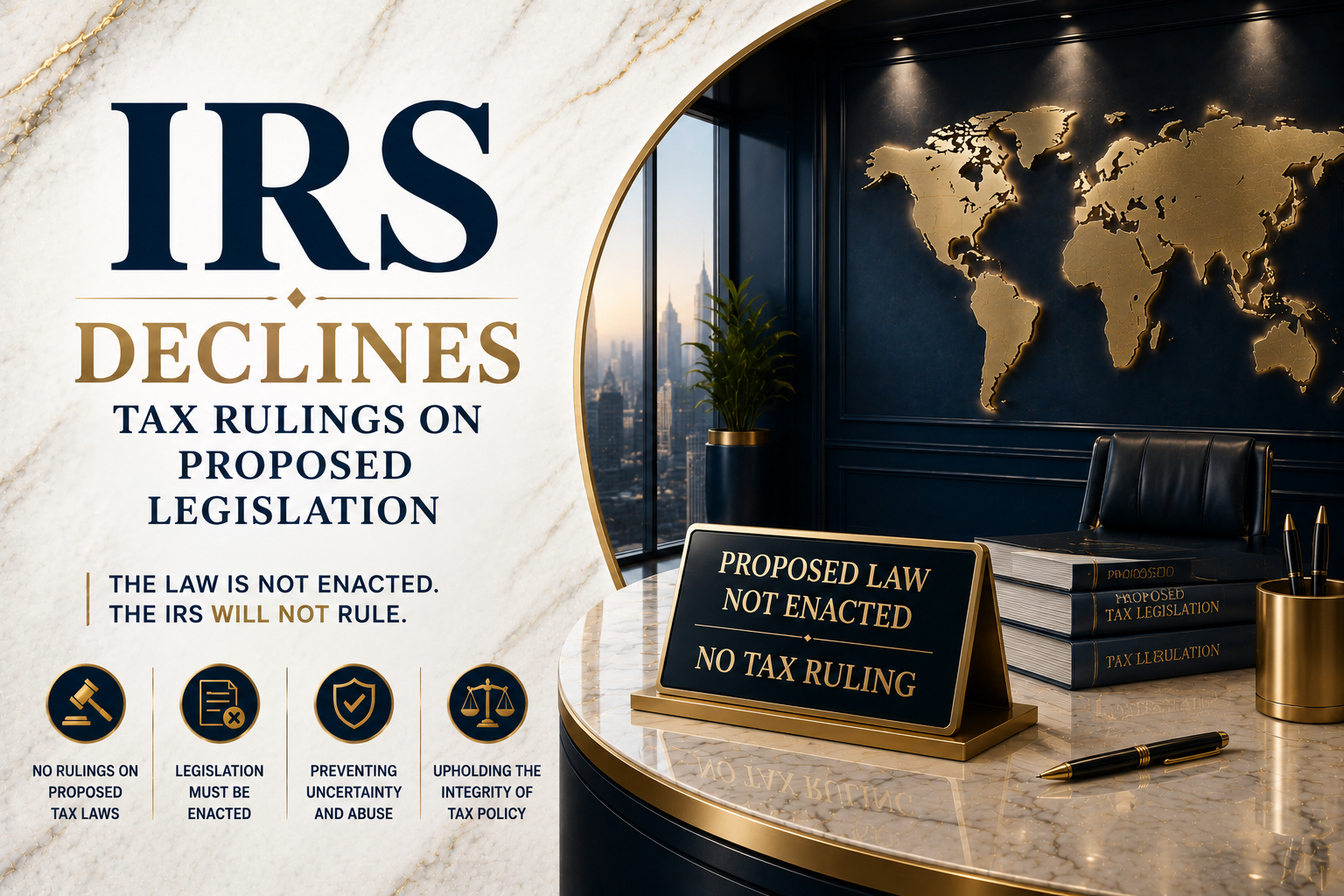
Businesses and taxpayers often want to know how pending legislation could affect future tax planning. However, the IRS generally will not issue advance letter rulings or determination letters explaining the federal tax consequences of laws that have not yet been enacted.
Instead, taxpayers must wait until legislation becomes law before seeking binding guidance on most tax issues.
Why the IRS Declines These Requests
Tax legislation frequently changes during the legislative process. Bills may be amended, delayed, or never enacted at all.
Because of this uncertainty, the IRS generally does not provide advance rulings based on proposed federal, state, local, municipal, or foreign legislation.
Rather than issuing binding guidance, the IRS may only provide general informational responses when appropriate.
What This Means for Tax Planning
If Congress or another legislative body is considering tax law changes, businesses should avoid making significant tax decisions based solely on proposed legislation.
Until a bill becomes law, important provisions may change, including:
- Effective dates
- Eligibility requirements
- Tax rates
- Credits and deductions
- Reporting requirements
Planning based on legislation that is still under consideration may create unnecessary tax risk.
A Limited Exception
There is a narrow exception involving certain eligible deferred compensation plans under Section 457(b). In limited circumstances, the IRS may issue guidance regarding the effect of proposed state or local legislation on these plans if all procedural requirements are satisfied.
Outside of this specialized area, advance rulings on proposed legislation are generally unavailable.
Monitor Legislative Developments Carefully
Businesses should monitor proposed tax legislation throughout the legislative process and be prepared to adjust their tax strategies once new laws are enacted.
Working with a qualified tax advisor can help ensure planning decisions are based on current law rather than proposed changes that may never take effect.
Final Thoughts
The IRS generally will not issue advance rulings on the tax consequences of proposed legislation because the law may still change before enactment. Taxpayers should base planning decisions on current law while remaining flexible enough to respond when new legislation is officially enacted.
Concerned about how pending tax legislation could affect your business? Our CPA team can help you evaluate current tax rules, monitor legislative developments, and prepare practical tax strategies that can adapt as new laws take effect.